
Traditional Nathdwara Pichwai Art: History, Meaning and Techniques
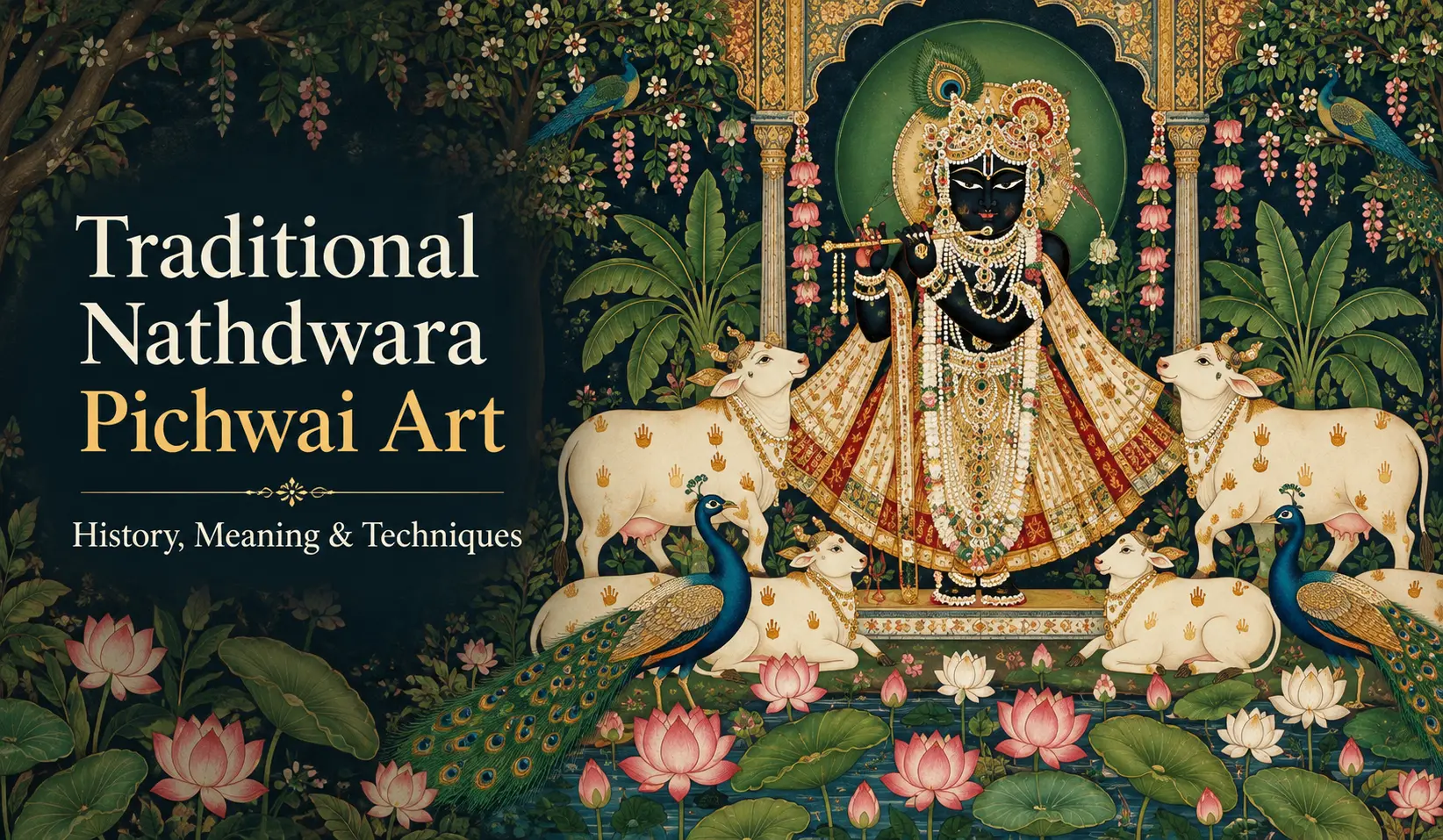
Traditional Nathdwara Pichwai Art: Discover Its Rich History and Meaning
Traditional Nathdwara Pichwai art is one of India’s most beautiful devotional painting traditions, recognised for its intricate patterns, rich colours and spiritual symbolism. Originating in Nathdwara, Rajasthan, this art form is closely connected with the worship of Shrinathji, a form of Lord Krishna. For generations, skilled artists have created detailed paintings featuring Krishna, cows, lotus flowers, peacocks and scenes inspired by nature.
Unlike ordinary decorative paintings, these artworks have a deeper cultural and religious meaning. Every colour, figure and decorative element contributes to a devotional story. Traditional Nathdwara Pichwai art reflects the artistic heritage of Rajasthan while preserving the customs and beliefs associated with the Pushtimarg tradition.
Today, art enthusiasts, collectors and home decorators appreciate Pichwai paintings for their craftsmanship and timeless appeal. Understanding their origins, symbolism and techniques helps us recognise why this traditional Indian art form continues to inspire people.
1. Origins of Traditional Nathdwara Pichwai Art in Rajasthan
Traditional Nathdwara Pichwai art developed around the Shrinathji temple in Nathdwara, a historic town in Rajasthan’s Rajsamand district. The town became an important centre of Krishna devotion after the Shrinathji deity was brought to the region in the 17th century. As temple traditions developed, artists began creating large painted cloth backgrounds to decorate the space behind the deity.
The word Pichwai is commonly associated with the idea of something placed behind an image. Traditionally, these paintings were displayed behind Shrinathji’s idol as part of the temple’s devotional decoration. They helped create an appropriate visual setting for worship and reflected festivals, seasonal changes and important religious occasions.
Over time, Traditional Nathdwara Pichwai art developed into a specialised painting practice. Artists and families passed their knowledge from one generation to another. They learned how to prepare cloth, create compositions, mix colours and paint intricate details using traditional methods.
The paintings became known for their elaborate arrangements, carefully drawn figures and repeated decorative patterns. Their artistic identity was shaped by temple customs, religious storytelling and the skills of Nathdwara’s painters.
2. Connection with Shrinathji and the Pushtimarg Tradition
The spiritual foundation of Traditional Nathdwara Pichwai art is closely connected with Shrinathji, who represents Lord Krishna in his child form. In the Pushtimarg tradition, devotion is expressed through personal service, music, food offerings, clothing, decoration and daily rituals.
Pichwai paintings contribute to this devotional environment. Different artworks may be displayed according to the season, festival or special occasion. For example, paintings associated with Sharad Purnima may feature moonlight and night-time scenes. Summer-themed compositions may include water, flowers and refreshing colours to reflect the season.
Some paintings depict Shrinathji surrounded by cows, gopis, lotus flowers and other elements connected with Krishna’s stories. These details are selected to support the devotional theme rather than simply fill empty spaces.
This religious connection makes Traditional Nathdwara Pichwai art different from many other decorative painting styles. It combines artistic expression with worship, allowing visual storytelling to become part of the temple experience.
3. Common Motifs and Their Symbolic Meanings
The motifs used in Traditional Nathdwara Pichwai art are meaningful elements that communicate spiritual ideas and cultural stories. Their arrangement also creates the distinctive visual richness associated with Pichwai painting designs.
Cows
Cows are among the most recognisable elements in Krishna-inspired paintings. They represent the pastoral world of Krishna’s childhood and his association with cowherds. Cows may also symbolise kindness, abundance and the sacred relationship between Krishna and nature.
Lotus Flowers
The lotus is a recurring symbol in Indian religious art. It is commonly associated with purity, beauty and spiritual growth. In Traditional Nathdwara Pichwai art, lotus flowers may appear around Shrinathji, across ponds or within decorative borders.
Peacocks and Birds
Peacocks are strongly associated with Krishna’s visual identity, particularly through the peacock feather traditionally shown in his crown. Their colourful feathers add movement and beauty to a composition. Birds can also represent harmony and the natural world.
Trees, Water and Landscapes
Trees, flowering plants, rivers and lakes help establish the setting of a painting. These natural elements often refer to the landscapes connected with Krishna’s stories. They add depth while maintaining the decorative balance of the artwork.
Together, these motifs make Traditional Nathdwara Pichwai art meaningful to viewers who appreciate both its devotional background and its intricate visual language.
4. Traditional Materials Used in Pichwai Painting
Historically, Pichwai paintings were commonly created on cloth, particularly cotton fabric. The cloth was prepared carefully to provide a smooth surface for painting. Traditional preparation could involve applying a coating and polishing the fabric so artists could draw fine outlines and add detailed colours.
Natural pigments were an important part of traditional practice. Depending on the artist, period and availability of materials, colours could be prepared from minerals, plants and other natural sources. Gold and silver details were also used in some elaborate artworks to create a rich appearance suitable for temple settings.
Traditional Nathdwara Pichwai art is recognised for its controlled use of colour. Red, yellow, green, blue, white and earthy shades may appear in different combinations. The selection often depends on the subject, seasonal theme and intended visual effect.
Modern artists may also use commercially prepared paints and alternative surfaces. These adaptations make Pichwai-inspired artwork more accessible, but traditional materials and preparation methods remain important when studying the historical art form.
5. Techniques and Intricate Detailing
Creating Traditional Nathdwara Pichwai art requires patience, planning and a high level of artistic skill. The process generally begins with preparing the cloth or painting surface. The artist then plans the composition, marks the main figures and outlines the surrounding decorative elements.
Fine brushes are used to create delicate lines, facial features, jewellery, clothing patterns, flowers and borders. Repeated motifs must be placed carefully to maintain consistency throughout the composition. Even small details, such as patterns on a cow or individual lotus petals, can require considerable attention.
Layering is another important part of the process. Artists apply colours in stages, allowing different sections of the composition to become clear and visually balanced. Highlights and ornamental details may be added towards the end. In elaborate pieces, metallic accents can create a distinctive decorative finish.
The beauty of Traditional Nathdwara Pichwai art comes from the combination of detailed craftsmanship and meaningful imagery. The central devotional figure receives attention, while the surrounding patterns and motifs complete the story.
6. Traditional Pichwai Painting vs Contemporary Interpretations
Traditional and contemporary Pichwai artworks share several visual elements, but they can differ in purpose, scale, materials and presentation.
| Feature | Traditional Pichwai painting | Contemporary Pichwai interpretation |
|---|---|---|
| Purpose | Primarily associated with devotional and temple settings | Often created for homes, galleries and collectors |
| Surface | Traditionally prepared cloth | Canvas, paper, fabric and other surfaces |
| Themes | Shrinathji, festivals and devotional scenes | Traditional themes and modern compositions |
| Materials | Historically used natural pigments and traditional finishes | May use acrylics and modern painting materials |
| Presentation | Often large, detailed textile artworks | Available in different sizes and decorative formats |
Contemporary artists may simplify compositions, introduce new colour palettes or create smaller artworks suited to modern interiors. Some retain traditional motifs while adapting the format for framed displays and personal collections.
These interpretations introduce new audiences to the art form. However, it is useful to understand whether an artwork is a traditional devotional Pichwai, a contemporary interpretation or a design inspired by Pichwai traditions. This distinction helps buyers and art enthusiasts make informed decisions.
7. How to Appreciate and Care for Pichwai Artworks
Appreciating Traditional Nathdwara Pichwai art involves looking beyond its colours and decorative patterns. Notice the central subject, the arrangement of figures, the repeated motifs and the relationship between the artwork and its devotional theme.
When selecting a painting, consider its subject, craftsmanship, materials and intended use. Ask about the artist, the painting process and whether the piece is handmade or a printed reproduction. These details help you understand its artistic and cultural value.
Proper care is equally important. Keep paintings away from direct sunlight, excessive moisture and damp walls. Avoid touching painted surfaces unnecessarily, and use suitable framing or a protective display arrangement. For older, delicate or valuable artworks, consult a professional art conservator before attempting cleaning or repairs.
If you are interested in exploring the motifs and patterns associated with Pichwai, a creative painting kit can provide an accessible introduction. You can also explore the Pichwai art kit collection through Craffty Creations and discover ways to learn about this traditional style through creative activities.
8. Why Traditional Nathdwara Pichwai Art Remains Relevant Today
Traditional Nathdwara Pichwai art continues to attract attention because it brings together devotion, storytelling and skilled craftsmanship. Its motifs connect viewers with Krishna’s stories, while its detailed compositions preserve artistic techniques developed through generations.
The art form also demonstrates how traditional Indian painting can remain meaningful in changing times. Collectors may value historically informed works, while contemporary audiences may choose smaller interpretations for their homes or creative spaces.
Supporting artists, learning about the origins of paintings and understanding the difference between handmade works and printed reproductions are meaningful ways to appreciate this tradition. When viewers understand the stories behind the motifs, Pichwai becomes more than a decorative style. It becomes a visual expression of culture, devotion and heritage.
Conclusion
Traditional Nathdwara Pichwai art represents a remarkable meeting of devotion, storytelling and traditional craftsmanship. From its origins in the worship of Shrinathji to its symbolic motifs and carefully developed painting techniques, every aspect reflects a rich cultural history.
Understanding its materials, symbolism and evolution helps us appreciate why this art form continues to inspire artists, collectors and admirers of Indian heritage. For those who wish to explore Pichwai-inspired creativity, Craffty Creations offers an opportunity to discover this traditional style through creative products and learning experiences. Explore the collection and bring the beauty of Indian art into your creative journey.
Frequently Asked Questions
1. What is Traditional Nathdwara Pichwai art?
Traditional Nathdwara Pichwai art is a devotional painting tradition from Nathdwara, Rajasthan. It is closely associated with Shrinathji worship and features detailed religious scenes, symbolic motifs and decorative patterns.
2. Why is Shrinathji important in Pichwai paintings?
Shrinathji is a form of Lord Krishna worshipped in the Pushtimarg tradition. Pichwai paintings are traditionally displayed behind the deity and often represent festivals, seasons and devotional themes.
3. What are the common motifs in Pichwai art?
Common motifs include cows, lotus flowers, peacocks, trees, gardens, water bodies and images of Shrinathji. Each element contributes to the painting’s devotional and visual meaning.
4. Which materials are traditionally used for Pichwai painting?
Traditional works were commonly painted on prepared cotton cloth using pigments derived from natural sources. Some elaborate artworks also feature gold or silver details.
5. How is traditional Pichwai painting different from modern Pichwai art?
Traditional works were closely connected with temple worship and established devotional compositions. Modern interpretations may use contemporary materials, smaller formats and designs intended for home decoration.
6. How can I protect a Pichwai painting?
Keep it away from direct sunlight, moisture and damp conditions. Handle it carefully, use suitable framing and seek professional conservation advice for valuable or delicate works.
Posts Widget
-
1

-
2
-
3
-
4



Payment Methods

Designed and Developed with ❤️ by team seofox.io