
Easy Pichwai Painting Ideas for Beginners: A Step-by-Step Guide
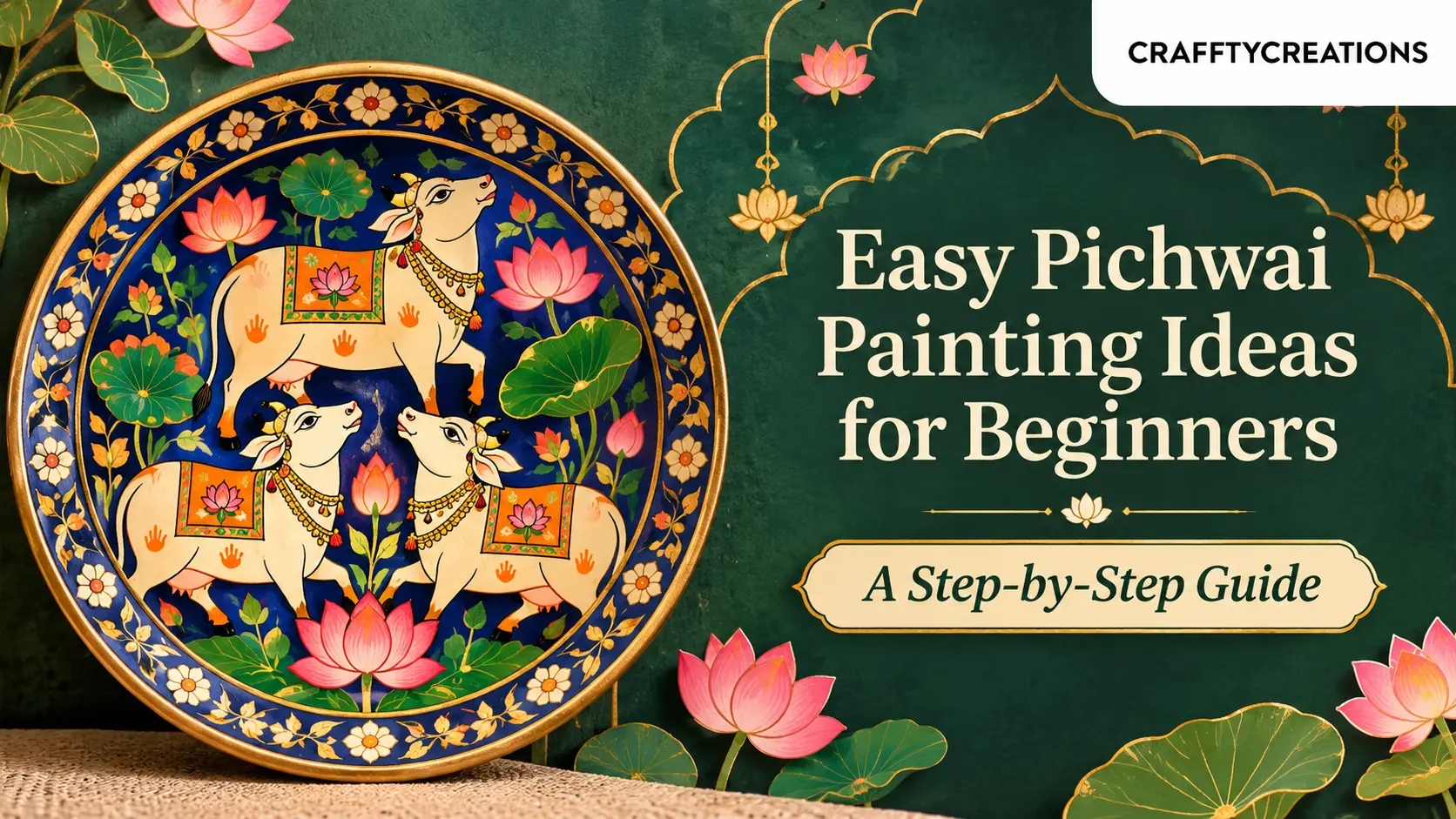
Easy Pichwai Painting Ideas: Simple Designs for Beginners to Try at Home
Traditional Indian art offers many beautiful ways to explore creativity, and Pichwai painting is a wonderful place to begin. Inspired by the devotional art of Nathdwara, Rajasthan, this style is recognised for its colourful compositions, lotus flowers, cows, peacocks and delicate decorative patterns. If you are new to painting, starting with simple motifs can make the learning process enjoyable and manageable. With the right materials, basic drawing techniques and a little patience, you can create attractive artwork at home. These easy Pichwai painting ideas will help beginners understand the style, practise traditional patterns and gradually develop confidence in their painting skills.
1. What Beginners Should Know About Pichwai Painting
Pichwai painting is a traditional Indian art form associated with Shrinathji, a form of Lord Krishna worshipped in Nathdwara, Rajasthan. Historically, artists created detailed paintings on cloth to decorate the space behind the deity in temples. These compositions often featured devotional scenes, cows, lotus flowers, peacocks and elements from nature.
For beginners, understanding the basic visual language is more important than trying to recreate a complicated traditional composition immediately. Start by observing how artists arrange the main subject, create decorative borders and repeat patterns to fill the background.
Easy Pichwai painting ideas usually focus on one or two recognisable elements rather than a complete temple-style composition. A single lotus, a simple cow outline or a floral border can help you practise the characteristic shapes and details of Pichwai art.
The aim is to learn gradually. You do not need advanced drawing skills to begin. Simple shapes, careful outlines and consistent colour application can produce an attractive result.
2. Five Easy Pichwai Painting Ideas for Beginners
Choosing a manageable subject makes your first painting experience more enjoyable. Try these beginner-friendly designs before moving towards elaborate Pichwai painting designs.
1. Simple Lotus Flower
The lotus is one of the most recognisable motifs in Pichwai art. Begin with a small central shape and draw pointed petals around it. Add two or three layers of petals to create depth.
Use pink or red for the petals, green for the leaves and a lighter shade for highlights. Keep the outline simple and practise making the petals similar in size.
2. Decorative Floral Border
A floral border is an excellent exercise for learning repetition and spacing. Draw small flowers connected by curved stems along the edges of your paper or canvas.
Use two or three colours throughout the border to maintain consistency. You can add tiny leaves, dots and curved lines to make the design more decorative.
3. Beginner-Friendly Cow Motif
Cows are closely connected with Krishna’s stories and are frequently featured in traditional Pichwai compositions. Start with a simple side-facing cow using basic shapes for the body, head, legs and tail.
Once the outline looks balanced, add small decorative patterns to the body. Avoid complicated facial details in your first attempt. Focus on the overall shape and clean lines.
4. Peacock Feather Design
A peacock feather is another suitable subject for beginners. Draw a long curved stem and create an oval-shaped eye near the top. Add small curved strokes around the central pattern.
Use blue, green and yellow shades to bring the feather to life. This design can be used independently or included in a larger composition.
5. Small Floral Composition
Combine flowers, leaves and simple curved stems to create a compact artwork. This is one of the most flexible easy Pichwai painting ideas because you can change the size, arrangement and colours according to your preference.
3. Basic Tools and Materials You Need
You do not need an expensive collection of supplies to begin. A few basic materials are enough to practise simple motifs and develop your technique.
| Material | Purpose | Beginner tip |
|---|---|---|
| Drawing paper or canvas | Main painting surface | Start with a small, smooth surface |
| Pencil and eraser | Sketching and corrections | Use light pencil strokes |
| Acrylic or poster colours | Adding colour | Begin with a limited colour palette |
| Fine brushes | Outlines and small details | Keep one thin brush for detailing |
| Medium brushes | Filling larger areas | Choose a comfortable brush size |
| Palette and water container | Mixing and cleaning | Keep colours organised |
| Black or dark paint | Defining outlines | Apply outlines after the base colours dry |
For your first project, choose a surface that is easy to handle. Paper is suitable for practice sketches, while canvas can be used when you are ready to create a finished decorative piece.
Easy Pichwai painting ideas become easier to follow when your materials are organised before you start. Keep a separate space for mixing colours and cleaning brushes so that your working area stays comfortable.
4. Step-by-Step Guide to Painting a Simple Lotus Motif
A lotus is a good first project because its shape can be created using simple curves and repeated petals. Follow these steps to practise a basic Pichwai-inspired composition.
Step 1: Prepare your surface
Choose a small sheet of drawing paper or canvas. Make sure the surface is clean and dry. If you are using canvas, apply a suitable base coat if required by the surface and paint instructions.
Step 2: Draw the basic outline
Use a pencil to draw a small curved base for the lotus. Add one central petal and two petals on each side. Complete the flower by adding another layer of smaller petals.
Step 3: Add leaves and decorative elements
Draw two or three leaves below the flower. You can also include small circles, dots or curved lines around the design. Keep enough empty space so the composition does not look crowded.
Step 4: Apply the base colours
Choose pink for the lotus, green for the leaves and a light background shade. Apply the colours carefully and allow each layer to dry before adding more details.
Step 5: Add outlines and fine details
Use a fine brush to define the petals and leaves. Add small lines inside the petals to create texture. Finish with tiny dots or decorative patterns around the flower.
Step 6: Review and finish
Check whether the design looks balanced. Correct any uneven areas and allow the painting to dry completely. If your paint requires a protective finish, follow the manufacturer’s instructions.
Practising these steps will help you understand how traditional motifs can be adapted into easy Pichwai painting ideas for beginners.
5. Choosing Colours and Practising Fine Details
Colour selection plays an important role in creating a recognisable Pichwai-inspired composition. Traditional artworks often feature rich shades of red, yellow, green, blue and white. Gold-coloured details may also be used in decorative interpretations.
For beginners, it is better to work with a limited palette. Select three or four main colours and use lighter or darker variations to create depth. For example, combine pink and red for lotus petals, or use two shades of green for leaves.
Fine details should be added gradually. Practise small dots, curved lines, leaf veins and repeated floral shapes on a separate sheet before applying them to your main artwork.
Many easy Pichwai painting ideas look attractive because of their neat outlines and repeated patterns rather than complicated shading. Take your time and allow colours to dry between layers. This helps prevent unwanted mixing and keeps the final design clean.
6. Common Beginner Mistakes and How to Avoid Them
Learning a new painting style involves experimentation. However, a few simple precautions can make your practice sessions more productive.
Starting with complicated designs: Avoid attempting a complete traditional composition immediately. Begin with a lotus, flower or small decorative border.
Using too many colours: A large colour palette can make the painting look inconsistent. Choose a few complementary shades and repeat them throughout the design.
Applying too much paint: Thick paint can hide fine outlines and small patterns. Apply colour in controlled layers and follow the paint manufacturer’s guidance.
Ignoring proportions: A flower or cow motif may look unbalanced if its parts are too large or too small. Sketch the entire design lightly before painting.
Rushing the details: Fine patterns need patience. Allow the base colours to dry and use a thin brush for outlines and decorative elements.
Skipping practice: Do not expect every first attempt to look perfect. Repeating the same motif will gradually improve your control and confidence.
7. How to Choose a Suitable Pichwai Art Kit for Beginners
A suitable art kit can make learning easier because it brings essential materials together. Before purchasing one, check what is included and whether the contents match your skill level.
Look for a kit with a clearly explained design, suitable painting surfaces, basic colours and brushes that can handle both larger areas and fine details. Beginners may prefer a guided activity featuring a lotus, flower or another simple motif.
Also consider the size of the project, the clarity of the instructions and whether additional supplies are required. Product descriptions should explain the materials and intended use so you can understand what you are purchasing.
If you want to learn more about the traditional background and creative possibilities of this art form, explore our Pichwai art kit guide. For floral inspiration, read our related article on lotus Pichwai painting. These resources can help you choose a subject before starting your own project.
Craffty Creations also features a Pichwai Painting in its product collection. Explore the Craffty Creations website and review the available product details to find artwork that interests you.
Conclusion
Learning Pichwai painting can be a rewarding way to explore traditional Indian art and develop your creativity. Starting with simple lotus flowers, floral borders, cow motifs and peacock feathers allows beginners to understand the patterns and colours associated with this beautiful style.
With regular practice, suitable materials and patience, you can gradually move from basic sketches to more detailed compositions. Explore the traditional art guides and painting collection at Craffty Creations to discover more inspiration for your creative journey.
Need Help Choosing Your Pichwai Art Kit?
Ready to explore the beauty of traditional Pichwai painting? Whether you are a beginner looking for the right art kit or need assistance choosing a creative product, the Craffty Creations team is here to help. Get in touch with us for product enquiries and support.
Call: +91 9746570175
Email: info@crafftycreations.com
Business Hours:
Monday to Friday: 9:00 AM – 5:00 PM
Saturday and Sunday: Closed
Explore: https://crafftycreations.com/
Frequently Asked Questions
1. Is Pichwai painting suitable for beginners?
Yes. Beginners can start with simple motifs such as lotus flowers, leaves, floral borders and peacock feathers. Practising basic shapes helps build confidence before attempting detailed compositions.
2. What is the easiest Pichwai motif to paint?
A simple lotus flower is a good starting point because it uses repeated petal shapes and basic colours. Floral borders and peacock feathers are also suitable beginner projects.
3. Which colours are commonly used in Pichwai art?
Pichwai-inspired paintings often use red, pink, yellow, green, blue and white. Beginners can start with three or four colours and gradually experiment with additional shades.
4. Can I create Pichwai-inspired art on canvas?
Yes. You can practise Pichwai-inspired motifs on paper or canvas. Choose a suitable surface and paints, and follow the manufacturer’s preparation and drying instructions.
5. What should I look for in a beginner Pichwai art kit?
Look for clear instructions, a manageable design, suitable colours, brushes and an appropriate painting surface. Check whether the kit includes everything needed to complete the project.
Posts Widget
-
1

-
2
-
3
-
4



Payment Methods

Designed and Developed with ❤️ by team seofox.io