
Pichwai Painting: How to Select the Right Design, Size and Colours
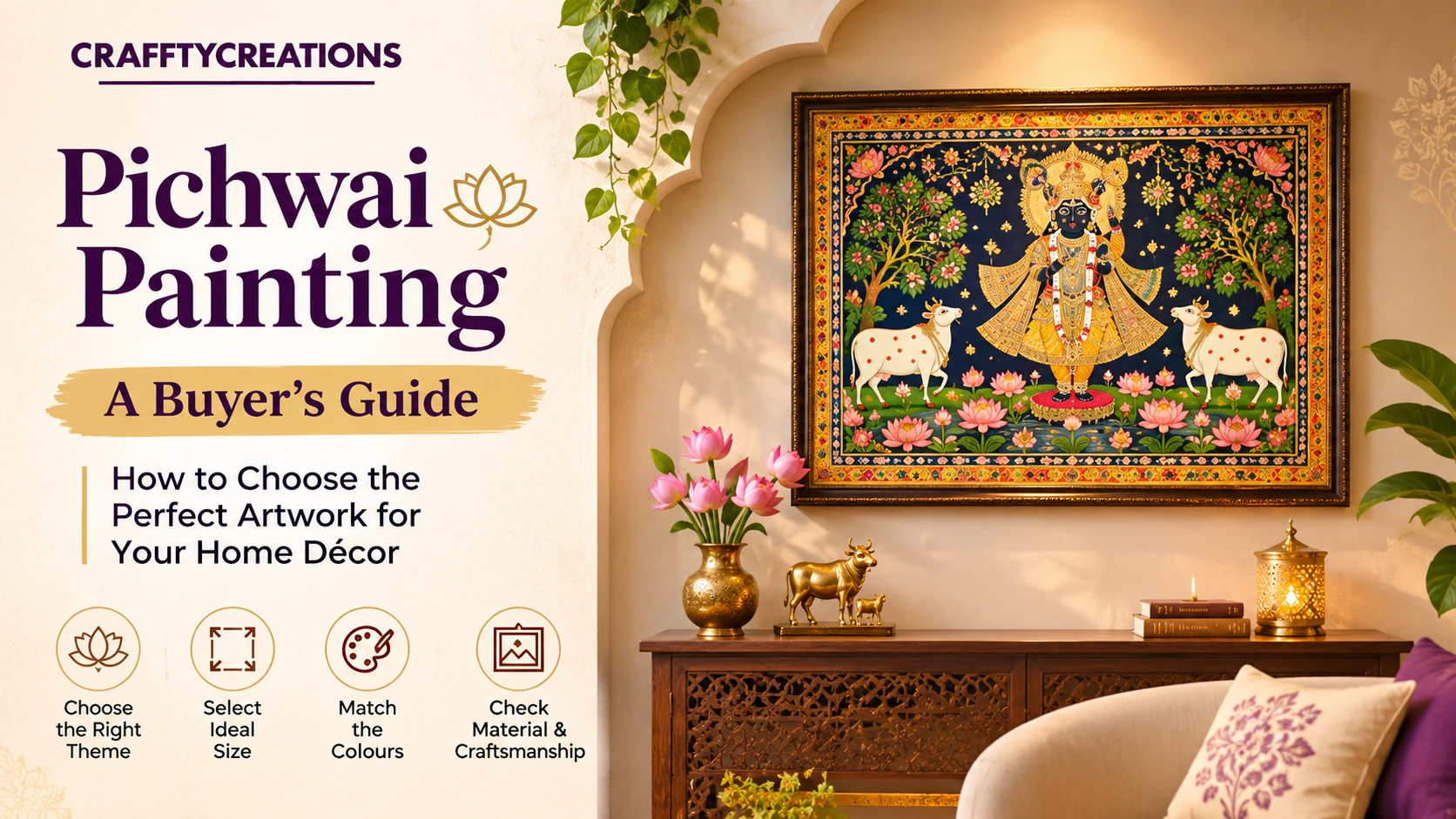
Pichwai Painting: How to Choose the Perfect Artwork for Your Home Décor
A Pichwai painting can bring traditional Indian artistry, intricate storytelling and a distinctive colour palette into a modern home. But choosing one involves more than selecting an attractive picture. The subject, size, colours, surface, framing and display location all influence how the artwork will look in your space. Whether you are decorating a living room, creating a peaceful corner or selecting a meaningful gift, understanding these details can help you make a thoughtful choice.
Originating from the Nathdwara tradition of Rajasthan, Pichwai art is closely associated with Shrinathji and stories from the life of Lord Krishna. Traditional works were created as devotional backdrops in temples and commonly feature lotuses, cows, peacocks, gopis and festival scenes. Today, a Pichwai painting is also appreciated as decorative artwork that connects traditional craftsmanship with contemporary interiors.
This guide explores how to choose the right artwork based on your interior style, preferred motifs, colour combinations, craftsmanship and display requirements.
Why Choose a Pichwai Painting for Your Home?
The appeal of this traditional art form lies in its combination of narrative, intricate detailing and strong visual character. A composition may feature a central devotional figure, a patterned border, a lotus pond or a gathering of cows. These elements can make the artwork a focal point without requiring many additional decorative accessories.
A Pichwai painting can complement a traditional interior with carved wood, brass accents and warm fabrics. In a contemporary room, it can create an interesting contrast against a simple wall, neutral furniture and clean lines. The key is to give the artwork enough visual space.
Unlike ordinary decorative prints, traditional Pichwai compositions often communicate stories and cultural associations. Choosing a design that connects with your personal taste can make the artwork more meaningful.
1. Choose a Pichwai Painting Theme That Matches Your Space
Start by considering the mood and purpose of the room. Shrinathji compositions often create a devotional focal point and may suit a prayer area or a room intended for quiet reflection. Lotus themes can bring a softer, nature-inspired quality to a space, while cow and peacock motifs introduce movement and decorative detail.
Festival scenes can feel celebratory and visually rich. A Pichwai painting with a dense composition may work well on a broad feature wall, while a simpler motif can suit a smaller wall or an understated room.
Think about the story you want the artwork to communicate rather than choosing only by colour. This approach helps you select a design that feels connected to the room and your personal preferences.
2. Select the Right Artwork Size for Your Wall
The scale of the artwork is one of the most important buying decisions. A small piece may look lost on a large empty wall, while an oversized work can make a compact room feel crowded. Measure the available wall area before choosing a size, and consider nearby furniture, doorways, lighting and other wall décor.
For a sofa wall, the artwork should relate proportionately to the furniture below it. Above a console, leave enough space so the painting does not feel squeezed between the furniture and ceiling. A detailed Pichwai painting may need additional visual breathing room because its decorative border is part of the composition.
| Display location | What to consider | Practical selection tip |
| Living room feature wall | Wall width, sofa size and viewing distance | Choose a size balanced with the furniture |
| Prayer or meditation area | Subject and placement | Consider a devotional theme |
| Bedroom | Colour intensity and room atmosphere | Choose a composition that complements the existing palette |
| Entryway or foyer | Available wall width | Avoid artwork that overwhelms the entrance |
| Study or reading corner | Lighting and nearby shelves | Keep detailed artwork visible without visual clutter |
3. Match the Colours with Your Interior Décor
Traditional Pichwai compositions are known for rich colours, which may include deep greens, reds, blues, yellows and decorative gold tones. The exact palette varies according to the artwork and technique.
Before purchasing a Pichwai painting, look at the dominant colours already present in your room. If your interior uses neutral shades, a vibrant composition can become the main accent. If the room already contains strong colours or patterned furnishings, a more restrained palette may create better balance.
You do not need to match every colour exactly. Repeating one or two tones through cushions, curtains or accessories can create a connected look.
Remember that colours can appear different under warm indoor lighting, daylight and on digital screens. If you are buying online, review the available product photographs and description. Ask the seller about any colour or finish details that are important to your decision.
4. Understand the Motifs and Their Visual Meaning
The motifs in this traditional art form are not merely decorative patterns. Many relate to devotional stories, seasons and celebrations. Shrinathji is a central subject in the Nathdwara tradition. Lotus flowers, cows, peacocks and scenes associated with Krishna’s leelas are also familiar visual elements.
A lotus-themed Pichwai painting may appeal to someone drawn to botanical details and symmetrical compositions. Cow motifs can create a pastoral, traditional atmosphere, while peacocks add colour and movement. Festival compositions may contain several figures and decorative elements, making them especially intricate to view.
When selecting a motif, consider both its meaning and visual density. A complex scene may reward closer viewing, whereas a simpler composition can be easier to appreciate from across a room.
5. Check the Material, Technique and Craftsmanship
Pichwai artworks have been created using different materials and techniques. Traditional examples are associated with prepared cloth and carefully applied colours, while contemporary interpretations may use other surfaces or methods. Some works are painted, while craft traditions also include embroidery, printing and woven approaches.
Do not assume that every Pichwai painting uses the same materials or is entirely hand-painted. Product descriptions should clarify the surface, medium and production technique.
Before purchasing, check the stated surface, dimensions, whether a frame is included and any care instructions. If the listing does not explain an important detail, contact the seller instead of making assumptions based on the photograph.
Fine outlines, consistent detailing, balanced composition and careful finishing can contribute to the visual quality of a work. Handmade pieces may show small variations. Ask the seller how these variations should be understood and whether the product images represent the exact item or an illustrative example.
| Buying detail | What to check | Why it matters |
| Surface | Cloth, canvas, paper or another stated material | Helps you understand the construction |
| Technique | Hand-painted, printed, embroidered or mixed technique | Clarifies how the design was produced |
| Dimensions | Artwork size and framed size | Helps plan the display location |
| Frame | Whether framing is included | Avoids confusion about the delivered product |
| Care | Cleaning and storage instructions | Helps maintain the artwork appropriately |
6. Plan the Framing and Placement of Your Pichwai Painting
Framing can change how artwork sits within a room. A simple frame may allow a detailed composition to stand out, while an ornate frame can reinforce a traditional interior. The right choice depends on the artwork’s surface, thickness and condition.
For delicate or raised details, seek advice from a professional framer about suitable glazing and clearance. Avoid choosing a frame that presses against the painted surface.
Think about the wall itself as well. Avoid locations exposed to prolonged direct sunlight, dampness or frequent splashes. Use secure hanging hardware appropriate for the artwork’s weight, and make sure the display does not interfere with doors, walkways or everyday use of the room.
A Pichwai painting should be displayed where its details can be appreciated. Give it enough surrounding space, choose suitable lighting and avoid placing it directly beside visually busy décor.
7. Choose a Pichwai Painting as a Thoughtful Gift
Traditional Indian artwork can be a meaningful gift for housewarmings, festive occasions, weddings or people who appreciate cultural craftsmanship. The best choice depends on the recipient’s taste, available wall space and connection with the subject.
A devotional theme may be meaningful to one person, while another may prefer floral or nature-inspired motifs. Consider the recipient’s home décor before selecting a design.
When gifting a Pichwai painting, confirm the dimensions, frame details, packaging and delivery arrangements in advance. If the recipient lives in a smaller home, a compact work may be easier to display. Include product information and care guidance where available so the recipient understands how to look after the piece.
Choose Traditional Artwork at Craffty Creations
Selecting traditional art is a personal process. Consider the story, colour palette, scale, technique and display requirements before making a decision. A thoughtfully selected Pichwai painting can complement your home while allowing its visual details and cultural associations to be appreciated.
Explore the artwork and décor options at Craffty Creations, and review the available product information before placing an order. If you need clarification about a product, its dimensions, material or display suitability, contact the team for assistance.
Frequently Asked Questions
What is a Pichwai painting?
It is a traditional devotional art form associated with Nathdwara in Rajasthan. These artworks were historically created as painted backdrops placed behind the idol of Shrinathji in temples. Their subjects often include Krishna-related stories, lotuses, cows and festival scenes.
Which room is suitable for displaying Pichwai artwork?
It can be displayed in a living room, prayer area, foyer, study or another suitable indoor space. Choose the location according to the artwork’s subject, size, lighting requirements and the room’s overall décor.
What should I check before buying a Pichwai painting online?
Review the dimensions, surface material, technique, framing details, product photographs, delivery information and care instructions. Ask the seller to clarify any important details that are not included in the listing.
Does every Pichwai artwork use natural colours?
No. Traditional works are associated with natural pigments, but contemporary artworks may use different materials and techniques. Check the specific product description rather than assuming that all pieces are made in the same way.
How should I care for this artwork?
Follow the care instructions supplied for the specific piece. In general, avoid prolonged direct sunlight, moisture and harsh cleaning products. Do not rub or wet the painted surface unless the artist or seller has specifically advised that method.
Contact With Us
Have questions about artwork, product details or décor options? Get in touch with Craffty Creations.
Phone: +91 9746570175
Email: info@crafftycreations.com
Opening Hours: Monday–Friday, 9:00 AM–5:00 PM
Weekend: Closed
Contact With Us for assistance with your art and décor enquiries.
Visit our website: https://crafftycreations.com/
Posts Widget
-
1
-
2

-
3
-
4



Payment Methods

Designed and Developed with ❤️ by team seofox.io