
Pichwai Painting: Uncover the Hidden Stories Behind Every Detail
Pichwai Painting: Discover the Stories, Symbols and Seasons Behind the Art
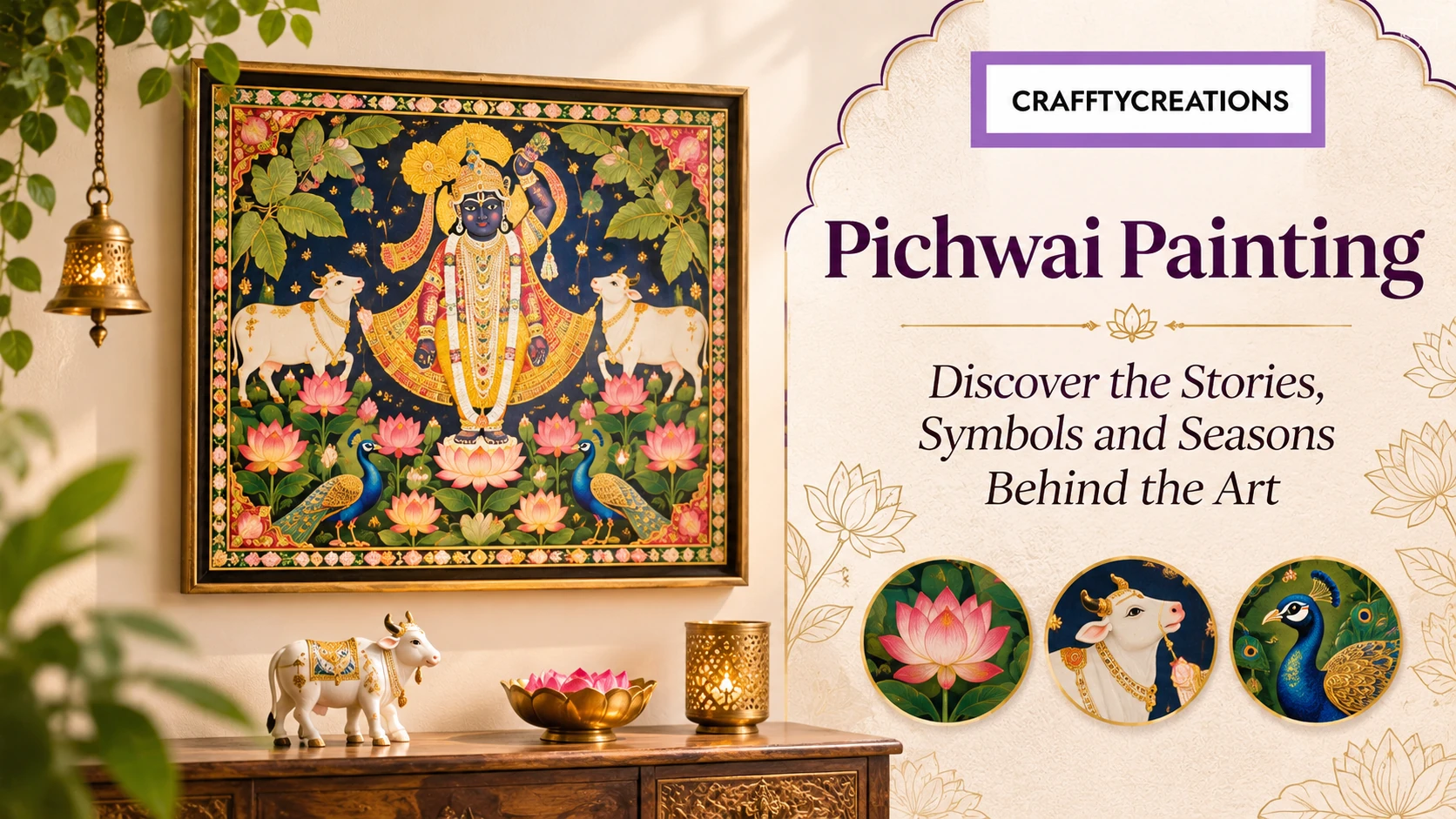
A Pichwai painting is more than a decorative artwork; it is a visual form of storytelling shaped by devotion, nature and the artistic traditions of Nathdwara, Rajasthan. Its detailed scenes may feature Shrinathji, lotus ponds, cows, peacocks, gopis and celebrations connected with devotional occasions. Learning to recognise these elements helps viewers understand the composition and appreciate the cultural ideas behind it.
Traditionally associated with the worship of Shrinathji, Pichwai art developed as a devotional backdrop used in temple settings. Artists arranged figures, flowers, animals and decorative details to create scenes connected with particular occasions or themes. Today, a Pichwai painting is also appreciated in homes and art collections, where its imagery offers a connection to Indian artistic heritage.
This guide explores the stories behind common motifs, the role of seasons and festivals, the use of colour, and the details that help viewers appreciate this distinctive art form.
The Storytelling Tradition Behind Pichwai Painting
The word Pichwai is commonly understood in relation to the cloth backdrop placed behind the image of Shrinathji. In the Nathdwara tradition, these works are closely connected with Pushtimarg devotional practice. Figures, flowers, animals, colours and architectural details help communicate a devotional setting or festive theme.
A traditional Pichwai painting may place Shrinathji at the centre, surrounded by attendants, cows, lotus flowers or other elements. The central figure guides the viewer’s attention, while surrounding details build the setting. Some compositions are symmetrical and formal; others feel more lively because they include groups of figures, animals or natural elements.
When viewing an artwork, begin with the central subject and then move towards the border. Notice how repeated patterns, scale and colour guide the eye. A carefully composed Pichwai painting uses these details to lead attention without making the scene feel crowded. This approach makes even a highly detailed composition easier to understand. For anyone exploring a Pichwai painting, reading the scene from its centre outward reveals how the visual story is organised.
1. Shrinathji in Pichwai Painting: Understanding the Central Figure
Shrinathji is one of the most recognisable subjects in Nathdwara Pichwai tradition. The figure is associated with Krishna and is often shown in a distinctive form and attire. Clothing, ornaments, posture and surrounding decorations may vary between compositions.
In a Pichwai painting, the central figure is often the visual anchor. Look at the garments, jewellery, background and objects placed nearby. These details help establish the mood of the scene. They also help viewers distinguish one Pichwai painting from another, even when both share a similar central subject. Some works have a formal devotional appearance, while others include elaborate natural or festive surroundings.
Not every contemporary artwork follows the same traditional format. Modern interpretations may simplify the central figure, change its scale or focus on a particular motif. Check the description of the specific artwork to understand its subject and technique. This is especially useful when a Pichwai painting uses a contemporary interpretation of a traditional subject.
2. Lotus Flowers, Cows and Peacocks: Reading Common Motifs
Nature plays an important role in many Pichwai compositions. Lotus flowers may appear across the foreground or around a central figure, creating a patterned setting. Cows are frequently associated with Krishna-related pastoral imagery, while peacocks contribute colour, movement and visual rhythm.
A Pichwai painting featuring a lotus pond can feel calm and balanced because repeated flowers create a strong visual pattern. Cow motifs may give the scene a pastoral character, while peacock feathers and birds can make the composition feel more dynamic. These contrasts give a Pichwai painting visual variety. Their precise meaning can depend on the specific story or devotional context. In a Pichwai painting, the relationship between these motifs often matters as much as the individual symbols.
| Motif | Common visual association | What to notice |
| Shrinathji | Central devotional subject | Posture, attire and placement |
| Lotus flowers | Nature and devotional setting | Repetition, pond arrangement and colour |
| Cows | Krishna-related pastoral imagery | Number, placement and landscape |
| Peacocks | Nature and decorative movement | Feather patterns and direction |
| Gopis and attendants | Devotional or narrative setting | Group arrangement and gestures |
| Trees and foliage | Natural surroundings | Branch patterns and background detail |
Rather than assigning one fixed meaning to every symbol, consider how the motifs work together. A group of cows beside a lotus pond creates a different atmosphere from a composition focused mainly on Shrinathji and attendants.
3. Seasonal and Festival Themes in Traditional Pichwai Painting
Some Pichwai works are associated with particular seasons, festivals or devotional occasions. The setting may include flowers, foliage, decorative canopies, water, clothing and colours that help create a sense of time or celebration.
A Pichwai painting with abundant flowers and greenery may suggest a nature-rich setting, while a composition with elaborate decorations and ceremonial details may be connected with a festive occasion. The exact interpretation depends on the subject and tradition represented, so consult the artwork description or a knowledgeable seller when a specific festival association matters to you. This context can deepen your appreciation of a Pichwai painting.
| Visual detail | Possible theme conveyed | Questions to ask |
| Dense flowers and foliage | Nature-rich or seasonal setting | Are the flowers part of a specific scene? |
| Decorative garments | Special devotional presentation | Is the attire linked to an occasion? |
| Canopies and ornate borders | Formal or ceremonial setting | How does the border frame the subject? |
| Water, ponds and lotuses | Nature-inspired composition | Do these details form a repeated pattern? |
| Groups of figures | Narrative or celebratory scene | Who is represented and what is happening? |
If you are choosing artwork for a festival or meaningful occasion, do not rely on colour alone to identify its theme. Read the product description and ask for clarification about the subject, story and cultural context. This helps you understand whether a Pichwai painting represents a named occasion or a broader devotional theme.
4. The Role of Colours in Pichwai Painting
Traditional compositions may use deep blues, greens, reds, yellows and gold-like details, although the palette varies across artworks and contemporary interpretations. Colour can separate the central figure from the background, highlight decorative borders or create a particular atmosphere.
In a Pichwai painting, repeated colours can connect different parts of the scene. A bright flower may draw attention to the foreground, while a darker background can make figures and ornaments stand out. Colour is not only decorative; it also helps organise a complex composition. In a Pichwai painting, contrast can help the main figure remain visible among intricate surrounding details.
When comparing artworks, look beyond whether the colours are bright or muted. Notice whether the palette is balanced, whether details remain clear and whether the background supports the main subject. If buying online, remember that screen settings and lighting can change how colours appear. Review multiple product photographs where available. When assessing a Pichwai painting, compare the background, borders and central figure rather than judging the palette from one small image.
5. Pichwai Painting Materials and Traditional Craftsmanship
Pichwai artworks have been created using different surfaces and methods. Traditional examples are associated with prepared cloth and painted detail, while contemporary products may use other materials or techniques. Some decorative interpretations may be printed, embroidered or created through mixed processes. The product description should explain what is being offered.
A Pichwai painting should not automatically be assumed to be entirely hand-painted or made with natural pigments. Before buying, check the medium, surface, dimensions, finish and whether a frame is included. If the description is unclear, ask the seller rather than inferring the technique from the image.
Look closely at outlines, repeated patterns, consistency of details and overall composition. Handmade pieces may show small variations, while printed interpretations may offer a more uniform appearance. The important point is to understand what you are purchasing. A Pichwai painting listing should clearly state whether the item is painted, printed, embroidered or made using a combination of methods.
6. How to Choose a Pichwai Painting with Personal Meaning
The most meaningful artwork is not necessarily the most elaborate one. You may connect with a subject because of its devotional significance, natural motifs, colour palette or the story it brings to mind.
When selecting a Pichwai painting, consider what draws your attention first. Is it Shrinathji, the lotus arrangement, the cows, the peacocks or the overall festive setting? Then consider where the artwork will be displayed and whether its subject suits the purpose of that space.
For a gift, think about the recipient’s interests and available space. A devotional composition may be meaningful to someone who values that tradition, while a nature-focused design may appeal to someone who enjoys detailed floral artwork. Ask about dimensions, framing, packaging and care before placing an order. These practical details help ensure that a Pichwai painting is suitable for the recipient and the intended display space.
7. How to Display and Care for Your Pichwai Painting
Plan the display so that the artwork’s details can be seen clearly. Avoid placing it where it will receive prolonged direct sunlight or be exposed to dampness. Choose secure hanging hardware suited to its weight, and leave enough surrounding space so the composition does not compete with crowded wall décor.
Care depends on the material and technique. Follow the instructions supplied with the specific piece. Avoid using water, cleaning sprays or abrasive cloths on painted or delicate surfaces unless the artist or seller has confirmed that the method is suitable. For valuable or damaged works, seek advice from a qualified art conservator. The correct care for a Pichwai painting depends on its actual surface and construction.
A Pichwai painting can become a conversation piece because viewers may notice new details each time they look at it. Understanding its motifs and story adds another layer of appreciation beyond its decorative appearance. This is what makes a Pichwai painting meaningful to viewers who value both art and cultural story telling.
Explore Traditional and Decorative Artwork at Craffty Creations
Choosing traditional artwork can bring cultural stories and detailed visual design into your surroundings. Explore the subject, motifs, colours and craftsmanship before making a decision, and review product details to understand the material and technique.
Craffty Creations features decorative and handcrafted products, including a Pichwai Painting listing in its collection. Browse the available artwork, check individual product information and contact the team if you need clarification about a particular item. Ask for accurate product details before deciding which Pichwai painting best suits your preferences.
Whether you are drawn to Shrinathji, lotus flowers, peacocks or a richly detailed festive scene, a Pichwai painting can offer a meaningful connection to traditional Indian visual culture.
Frequently Asked Questions
What is the main subject of traditional Pichwai art?
Shrinathji is a central subject in the Nathdwara tradition. Compositions may also include cows, lotus flowers, peacocks, gopis, attendants and decorative settings connected with devotional occasions.
What do lotus flowers and cows represent in Pichwai compositions?
They are recurring motifs in the visual language of Pichwai art. Cows are often associated with Krishna-related pastoral imagery, while lotus flowers contribute to the devotional and natural setting. Their precise role depends on the composition.
Are all Pichwai artworks connected with a specific festival?
Not necessarily. Some works are associated with particular seasons or devotional occasions, while others focus on a central figure or recurring motif. Check the description or ask a knowledgeable seller before assigning a specific festival meaning. Not every Pichwai painting depicts a seasonal celebration.
How can I tell whether a Pichwai artwork is hand-painted?
Check the product description for the stated technique and materials. Ask the seller for clarification if the listing does not specify whether the piece is hand-painted, printed, embroidered or made using another method.
What should I check before buying Pichwai artwork online?
Review the subject, dimensions, surface, production technique, finish, framing details, product photographs, delivery information and care instructions. Confirm important details before ordering. This is particularly important when a Pichwai painting is being purchased as a gift or for a specific room.
Contact With Us
Have questions about artwork, product details or decorative collections? Get in touch with Craffty Creations.
Phone: +91 9746570175
Email: info@crafftycreations.com
Opening Hours: Monday–Friday, 9:00 AM–5:00 PM
Weekend: Closed
Contact With Us for assistance with your art and décor enquiries.
Visit our website: https://crafftycreations.com/
Posts Widget
-
1

-
2
-
3
-
4



Payment Methods

Designed and Developed with ❤️ by team seofox.io