
The Ultimate Guide to Indian Ethnic Wear for Women
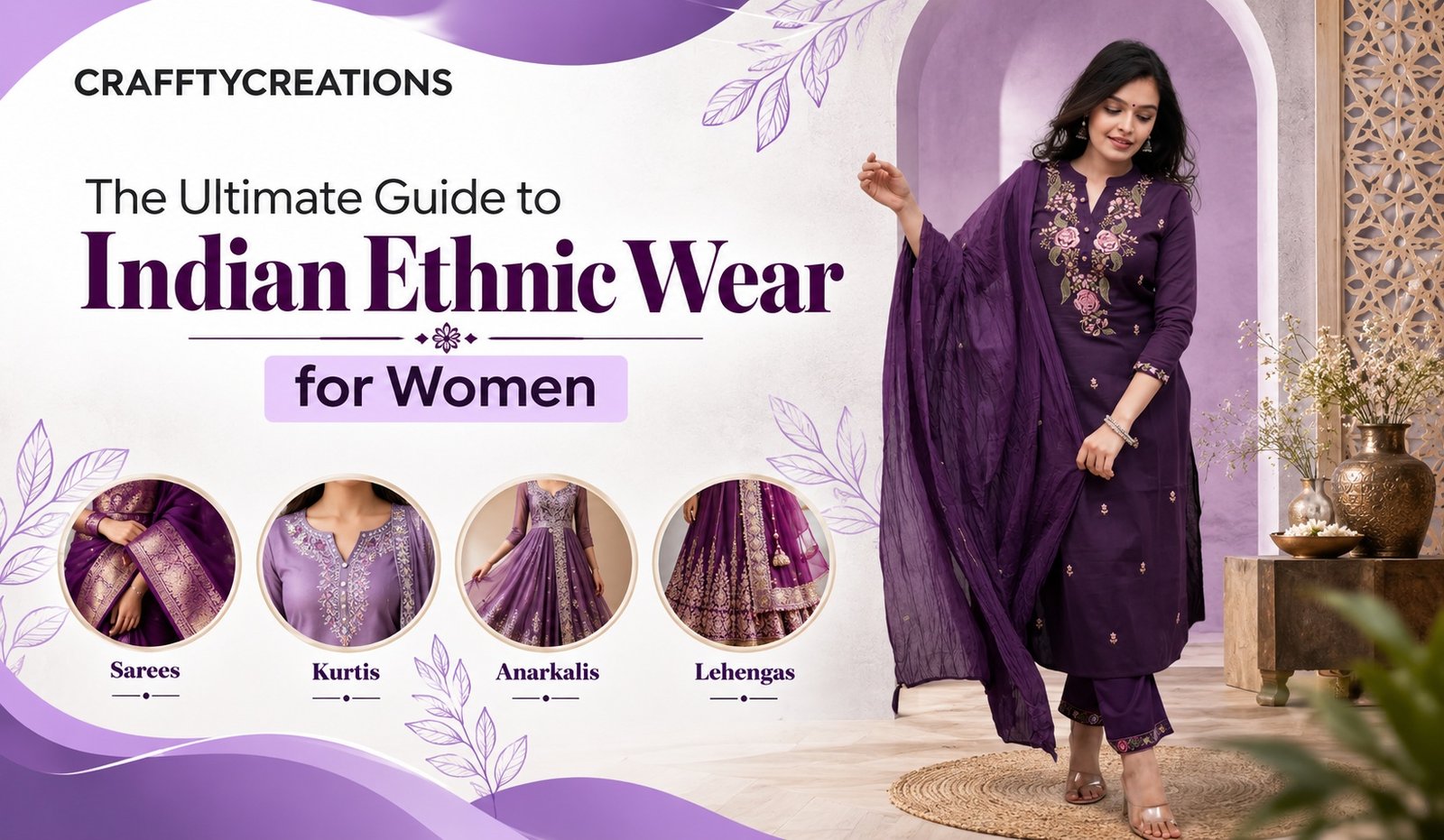
Indian ethnic wear has a timeless place in women’s fashion. From the graceful drape of a saree to the effortless versatility of a kurti and the flowing elegance of an Anarkali gown, traditional Indian clothing continues to evolve without losing its cultural identity. Today, ethnic wear is not limited to weddings or festivals. It has become a part of everyday wardrobes, office fashion, casual outings, family celebrations, parties, and special occasions.
What makes Indian ethnic wear so unique is the variety it offers. Different regions of India have their own fabrics, patterns, embroidery techniques, silhouettes, and traditions, while modern fashion continues to reinterpret these elements for today’s women. This makes it possible to find ethnic outfits that are traditional, contemporary, minimal, festive, comfortable, or a combination of several styles.
Whether you are building your first ethnic wardrobe, looking for an outfit for a special occasion, or simply exploring different styles, understanding Indian ethnic wear can help you make more confident choices.
What Makes Indian Ethnic Wear Special?
Indian ethnic wear is deeply connected to the country’s history, culture, craftsmanship, and regional traditions. Clothing styles have developed over centuries, with different communities creating distinctive ways of weaving, dyeing, embroidering, and decorating fabrics.
At the same time, Indian fashion has never remained completely static. Traditional garments have continuously adapted to changing lifestyles and preferences. Modern ethnic clothing often combines traditional silhouettes with contemporary cuts, lighter fabrics, new color combinations, and updated designs.
This balance between tradition and modernity is one of the main reasons ethnic wear continues to be popular.
A saree, for example, can be styled traditionally with classic jewellery and a conventional blouse, or it can be paired with a contemporary blouse and modern accessories. Similarly, a traditional kurti can be worn with leggings for a classic appearance or paired with trousers or palazzos for a more contemporary look.
Ethnic fashion therefore does not require you to follow a single style. It gives you the freedom to create an appearance that suits your personality.
The Saree: A Timeless Symbol of Indian Fashion
The saree remains one of the most iconic forms of Indian ethnic wear. Its appeal comes from its elegance, versatility, and ability to adapt to different occasions.
Sarees are available in countless fabrics, patterns, colors, and designs. A simple saree can create an understated appearance for a family gathering or formal event, while an embellished saree can become the centerpiece of a wedding or festive outfit.
The blouse also plays an important role in determining the overall appearance. A traditional blouse can maintain a classic aesthetic, while a contemporary neckline, sleeve style, or silhouette can give the outfit a modern character.
Accessories can further transform the look. Traditional earrings, bangles, necklaces, footwear, and handbags can complement a saree, while minimal accessories can create a more sophisticated appearance.
The versatility of the saree is one reason it continues to remain relevant across generations.
Kurtis and Their Place in Everyday Ethnic Fashion
While sarees are often associated with traditional and formal occasions, kurtis have become one of the most practical choices for everyday ethnic wear.
A kurti can be dressed up or down depending on how it is styled. A simple printed kurti can work well for everyday activities, while an embroidered or more decorative design can be suitable for festivals and family gatherings.
The choice of bottoms also changes the character of the outfit. Leggings can create a traditional and comfortable look, while straight pants, palazzos, trousers, or skirts can give the outfit a more contemporary appearance.
Because of this flexibility, many women consider kurtis an essential part of their ethnic wardrobe.
If you are interested in exploring the different styles available, our upcoming guide on the best kurti styles for different occasions will explore how different kurti designs can work for everyday wear, office settings, festivals, and special occasions.
The Elegance of Anarkali Gowns
Anarkali gowns have become increasingly popular among women who want traditional Indian styling with a graceful and flowing silhouette.
The Anarkali design is characterized by its flared shape, which creates an elegant appearance as the fabric moves. Modern Anarkali gowns may incorporate embroidery, prints, embellishments, decorative borders, or minimal detailing depending on their intended use.
For weddings and festive occasions, women often choose more elaborate designs. For smaller celebrations or daytime events, lighter fabrics and simpler patterns can create an equally elegant appearance without feeling overly formal.
Anarkali gowns also offer an alternative to sarees for women who want a traditional outfit that is relatively straightforward to wear.
If you are considering an Anarkali for an upcoming celebration, how to choose the perfect Anarkali gown for weddings and festive occasions is a useful next guide to explore.
Salwar Suits and the Importance of Comfort
Salwar suits have long been a popular choice for women who want a combination of traditional style and everyday comfort.
The classic combination of a kameez, salwar, and dupatta has evolved into numerous modern variations. Different cuts, fabrics, lengths, prints, and embroidery styles allow salwar suits to work for both casual and formal occasions.
Their comfortable construction makes them particularly useful for situations where you expect to move around frequently or wear the outfit for several hours.
Modern salwar suits may also incorporate contemporary trousers, straight pants, or other updated silhouettes while retaining traditional design elements.
Lehengas for Festive and Wedding Occasions
Lehengas are often associated with celebrations, weddings, receptions, and other occasions where a more elaborate traditional appearance is appropriate.
A traditional lehenga generally consists of a skirt, blouse or choli, and dupatta. The combination provides considerable scope for experimentation with embroidery, fabric, colors, patterns, and accessories.
Heavy embellishment can create a glamorous wedding look, while lighter designs can be suitable for smaller celebrations.
Because lehengas can be visually elaborate, styling them often involves finding a balance between the outfit and accessories. Jewellery, footwear, hairstyle, and makeup can all contribute to the final appearance.
Choosing the Right Ethnic Outfit for Different Occasions
The occasion should always influence your choice of ethnic wear.
A wedding provides an opportunity to wear something more elaborate, while an office environment generally calls for simpler designs and comfortable silhouettes. Festivals allow you to experiment with traditional colors and patterns, while everyday clothing should prioritize comfort and practicality.
For weddings, sarees, Anarkali gowns, lehengas, and embellished ethnic dresses can all create an elegant appearance. The right choice depends on the type of ceremony, venue, time of day, and your personal preference.
For festivals, colorful kurtis, sarees, Anarkalis, and ethnic dresses can create a celebratory appearance without necessarily requiring heavy embellishment.
For office wear, subtle prints, comfortable fabrics, sophisticated silhouettes, and minimal accessories can create a polished ethnic look.
For casual occasions, simple kurtis and ethnic dresses often provide the best balance between comfort and style.
Understanding the difference between occasions can prevent one of the most common mistakes in ethnic fashion: choosing an outfit based solely on how attractive it looks rather than considering where and how it will be worn.
Saree or Anarkali? Understanding the Difference
Sarees and Anarkali gowns are both popular choices for formal and festive occasions, but they offer very different styling experiences.
A saree provides greater flexibility because the draping style, blouse, accessories, and footwear can all change the final appearance. It can look traditional, elegant, minimalist, or contemporary depending on the styling.
Anarkali gowns, in comparison, provide a naturally flowing silhouette and generally require less styling effort to create a complete traditional appearance.
Neither option is universally better. The right choice depends on the occasion, comfort, personal style, and the kind of appearance you want.
For a more detailed comparison, read Saree vs Anarkali: Which Ethnic Outfit Should You Choose?.
Choosing the Right Fabric for Indian Ethnic Wear
Fabric can have a significant impact on the comfort and appearance of an ethnic outfit.
For everyday wear, lightweight and breathable fabrics can make an outfit easier to wear for long periods. This becomes particularly important during warmer weather or when you have a busy day ahead.
For weddings and formal celebrations, richer fabrics can provide the luxurious appearance often associated with festive clothing. Heavier fabrics and detailed embellishments may be suitable for evening occasions, while lighter designs can work well for daytime events.
Fabric should therefore be selected according to more than appearance. Consider the weather, duration of wear, occasion, movement, and maintenance requirements before making a decision.
The Role of Color in Ethnic Fashion
Color has always played an important role in Indian clothing.
Traditional ethnic fashion is known for its vibrant reds, pinks, yellows, greens, oranges, blues, and purples. At the same time, modern ethnic collections increasingly include pastels, neutral shades, earthy tones, and subtle combinations.
The right color depends on the occasion and your personal preferences.
Bright colors can create a lively and festive appearance, while softer shades can give an outfit a more elegant and understated character. Darker shades can provide a sophisticated evening appearance, while lighter shades can feel fresh and appropriate for daytime events.
There is no need to restrict yourself to traditional combinations. Contemporary Indian fashion provides plenty of opportunities to experiment with unexpected color pairings.
Styling Indian Ethnic Wear
Accessories can completely change the appearance of an ethnic outfit.
A simple kurti can become more festive with traditional earrings and a dupatta. A saree can take on a completely different character depending on the blouse and jewellery. An Anarkali gown may only need a pair of statement earrings and elegant footwear to create a complete occasion-ready look.
The most important principle is balance.
When an outfit already contains heavy embroidery, sequins, or elaborate detailing, minimal accessories can prevent the appearance from becoming overwhelming. On the other hand, a simple outfit can benefit from statement jewellery or other accessories.
Footwear should also be chosen according to both appearance and comfort. Traditional footwear can complement ethnic clothing, while modern footwear can be used to create a fusion appearance.
Creating a Modern Ethnic Look
Modern ethnic fashion has made it possible to combine traditional clothing with contemporary styling.
A saree can be worn with a modern blouse. A kurti can be paired with trousers rather than traditional bottoms. Traditional jewellery can be combined with a minimalist outfit, while contemporary accessories can be used to give a classic garment a modern appearance.
This fusion of traditional and contemporary elements is particularly useful for women who want to incorporate ethnic fashion into their everyday wardrobes without creating an overly traditional appearance.
Modern ethnic fashion is therefore less about following a fixed set of rules and more about experimenting with combinations that feel natural to you.
Building a Versatile Ethnic Wardrobe
A useful ethnic wardrobe does not need to contain dozens of outfits.
Instead, it should contain pieces that can be adapted for different situations.
A versatile saree can be worn to a formal event and styled differently for a family celebration. Several well-chosen kurtis can provide multiple everyday combinations when paired with different bottoms. An Anarkali can provide a reliable option for festivals and special occasions, while a simple ethnic dress can work for casual gatherings.
Accessories can further extend the usefulness of your wardrobe. A versatile pair of earrings, a traditional dupatta, and suitable footwear can work with multiple outfits.
The goal is not to own as many clothes as possible. It is to create a collection of pieces that you genuinely enjoy wearing and can style in different ways.
Ethnic Wear for Weddings and Festivals
Weddings and festivals are among the occasions where Indian ethnic fashion is most visible.
For weddings, the choice of outfit can depend on whether you are attending a ceremony, reception, engagement, or another event. More elaborate outfits may be appropriate for evening celebrations, while lighter styles can work well for daytime functions.
Festivals provide greater freedom to experiment with colors and traditional designs. A vibrant saree, embroidered kurti, elegant Anarkali, or traditional ethnic dress can all create a festive appearance.
When selecting an outfit for a celebration, remember that you may be wearing it for several hours. An outfit that combines visual appeal with comfort will usually be more enjoyable than one chosen purely for its appearance.
For more inspiration, explore how to style ethnic wear for weddings, festivals and parties.
Comfort and Fit Matter More Than Trends
Fashion trends can be useful for inspiration, but they should not be the only factor influencing your choices.
An outfit should fit comfortably and allow you to move naturally. This becomes particularly important for ethnic clothing because many occasions involve extended periods of sitting, walking, standing, or participating in ceremonies.
Pay attention to the fit of the shoulders, waist, sleeves, neckline, and overall length. The fabric should also be appropriate for the weather and duration of wear.
Comfort does not mean sacrificing style. Modern ethnic fashion provides plenty of options that combine attractive designs with practical silhouettes.
Shopping for Ethnic Wear Online
Online shopping has made it much easier to discover Indian ethnic wear from different styles and collections.
However, purchasing clothing online requires careful attention to product information. Before buying, check the size chart rather than relying solely on your usual clothing size. Different brands and designs can have different measurements.
Product descriptions can also provide useful information about fabric, design, fit, embellishments, and care instructions.
It is equally important to consider the occasion for which you are purchasing the outfit. A design that looks beautiful online may not necessarily be the most practical option for the event you have in mind.
Taking a little time to understand the product before purchasing can make the online shopping experience much more reliable.
Why Indian Ethnic Wear Continues to Evolve
Indian ethnic wear has survived changing fashion trends because it is not a single style. It is a broad and continuously evolving category.
Traditional garments continue to provide inspiration for modern designers, while new fabrics, silhouettes, prints, and styling techniques make these garments relevant to contemporary lifestyles.
This evolution means that ethnic fashion can appeal to different generations without becoming disconnected from its roots.
A woman may wear a traditional saree in one setting, a contemporary kurti in another, and a modern Anarkali gown for a celebration. All three remain part of the same broader tradition of Indian ethnic fashion.
Finding Your Personal Ethnic Style
There is no universal definition of the perfect ethnic outfit.
Some women prefer classic sarees and traditional jewellery. Others may feel more comfortable in kurtis or modern ethnic dresses. Some prefer heavily embellished outfits for celebrations, while others prefer minimal designs regardless of the occasion.
Your ethnic style can be influenced by your lifestyle, personality, comfort, cultural preferences, and the occasions you regularly attend.
The best approach is to experiment. Try different silhouettes, colors, fabrics, and accessories until you discover combinations that feel natural to you.
Fashion should not simply tell you what to wear. It should give you the freedom to express yourself.
Final Thoughts
Indian ethnic wear represents much more than traditional clothing. It brings together craftsmanship, cultural heritage, contemporary fashion, and personal expression.
From the timeless elegance of sarees to the everyday versatility of kurtis and the graceful appearance of Anarkali gowns, there are countless ways for women to incorporate ethnic fashion into their wardrobes.
The key is to choose clothing based on the occasion, fabric, comfort, fit, color, and personal style rather than following trends blindly. A well-chosen ethnic outfit should not only look beautiful but also allow you to feel confident and comfortable.
Whether you are preparing for a wedding, celebrating a festival, attending a family gathering, dressing for work, or simply looking for something different for your everyday wardrobe, Indian ethnic wear offers endless possibilities.
Explore the ethnic fashion collection at CrafftyCreations and discover traditional and contemporary styles that bring together the beauty of Indian fashion with the needs of modern women.
Posts Widget
-
1

-
2

-
3

-
4

Payment Methods

Designed and Developed with ❤️ by team seofox.io