
The Ultimate Guide to Indian Ethnic Wear for Women: Sarees, Kurtis, Anarkali Gowns & More
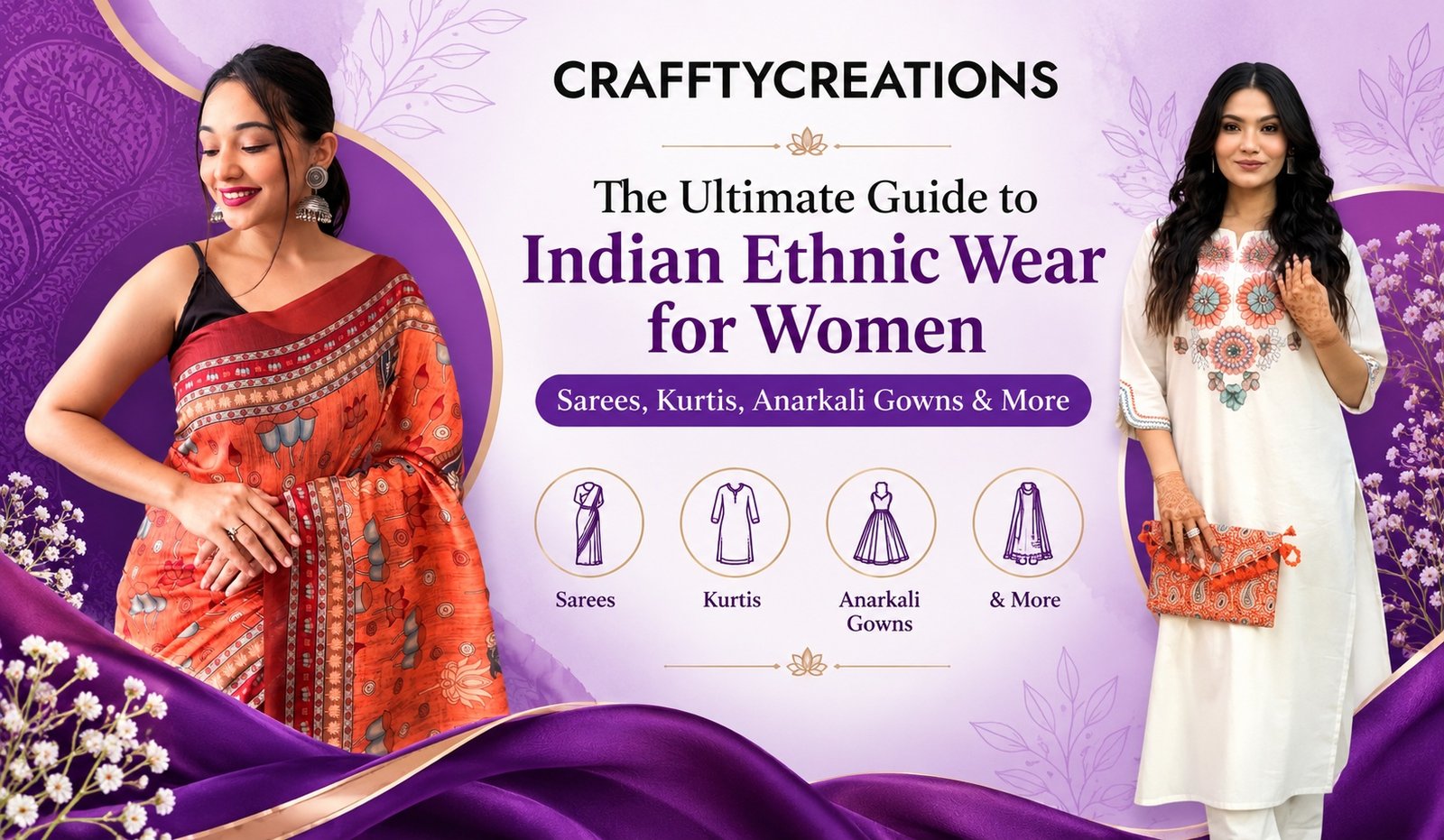
Indian ethnic wear has always held a special place in women’s fashion. From the graceful drape of a saree to the effortless charm of a kurti and the flowing silhouette of an Anarkali gown, traditional Indian clothing continues to evolve while preserving its cultural character. Today, ethnic wear is no longer limited to weddings and festivals. Women wear traditional and contemporary ethnic outfits to work, casual gatherings, family occasions, parties, and everyday outings.
What makes Indian ethnic wear particularly appealing is its variety. Different fabrics, colors, patterns, embroidery styles, silhouettes, and regional influences allow women to find outfits that suit their individual personalities. At the same time, modern designs have made traditional clothing easier to wear and style for contemporary lifestyles.
Whether you are building an ethnic wardrobe for the first time or simply looking for inspiration for your next outfit, understanding the different styles of Indian ethnic wear can help you make better choices.
Understanding Indian Ethnic Wear
Indian ethnic wear refers to clothing inspired by the traditional clothing styles and craftsmanship of India. Although the term covers a wide range of garments, sarees, kurtis, Anarkali outfits, salwar suits, lehengas, and ethnic dresses remain some of the most popular choices.
Every style has its own character. A saree can create an elegant and timeless appearance, while a kurti offers greater versatility for everyday wear. An Anarkali gown can bring a graceful and festive look to a special occasion, whereas a traditional salwar suit can provide a combination of comfort and cultural style.
The beauty of modern Indian ethnic fashion lies in the way these traditional silhouettes continue to adapt. Contemporary cuts, new fabrics, modern prints, minimal designs, and fusion styling have allowed ethnic clothing to become part of everyday fashion without losing its connection to Indian heritage.
The Timeless Appeal of the Saree
Few garments represent Indian fashion as strongly as the saree. Its appeal comes from its versatility as much as its traditional character. The same saree can look completely different depending on how it is draped, the blouse it is paired with, the jewellery selected, and the occasion for which it is worn.
For weddings and festive celebrations, women often choose sarees with intricate embroidery, embellishments, rich colors, or decorative borders. For everyday or professional occasions, lighter fabrics and simpler designs can create a more understated appearance.
Another reason sarees remain popular is that they allow considerable freedom in styling. A traditional saree can be paired with a contemporary blouse for a modern appearance, while traditional jewellery and classic draping can create a more conventional look.
For women deciding between different traditional silhouettes for a special occasion, the choice often comes down to personal preference and comfort. A detailed comparison of saree vs Anarkali and which ethnic outfit to choose can help when both styles appeal to you.
Kurtis: The Versatile Choice for Everyday Ethnic Fashion
While sarees are often associated with elegance and special occasions, kurtis have become one of the most practical forms of Indian ethnic wear for women. Their versatility makes them suitable for everything from everyday errands and college or office wear to family gatherings and festive occasions.
A kurti can be styled in numerous ways depending on its design and the bottoms it is paired with. Leggings, straight pants, palazzos, trousers, and skirts can all create different looks. Adding a dupatta and traditional jewellery can make a simple kurti more suitable for a festive occasion, while minimal accessories can keep the same outfit appropriate for everyday wear.
The variety available today also means that women can choose kurtis according to their preferred length, neckline, sleeve style, fabric, print, and overall silhouette. Someone who prefers simple clothing can choose a minimal printed kurti, while someone looking for a statement outfit might prefer embroidery or more elaborate detailing.
If you are building a wardrobe around versatile ethnic clothing, exploring the best kurti styles for different occasions can help you understand how different designs can work for casual, professional, festive, and semi-formal settings.
The Elegance of Anarkali Gowns
Anarkali gowns have become a popular choice for women who want the traditional appeal of Indian fashion combined with a graceful, flowing silhouette. Inspired by the classic Anarkali style, these outfits are often designed with a flared shape that creates an elegant appearance.
Anarkali gowns can range from relatively simple designs suitable for smaller celebrations to heavily embellished outfits intended for weddings and formal occasions. Embroidery, decorative borders, prints, sequins, and other detailing can change the overall character of the outfit.
One of the biggest advantages of an Anarkali is its ability to create a dressed-up appearance without requiring the styling associated with a saree. This makes it an attractive option for women who want something traditional but relatively straightforward to wear.
Choosing the right Anarkali depends on the occasion, fabric, length, color, embellishment, and personal comfort. If you are considering one for an upcoming celebration, our guide on how to choose the perfect Anarkali gown for weddings and festive occasions provides more detailed guidance.
Choosing Ethnic Wear According to the Occasion
The occasion plays an important role in determining which ethnic outfit is appropriate. An outfit that works beautifully for a wedding may feel excessive for everyday wear, while a simple daily-wear kurti might not create the desired impression at a formal celebration.
Weddings and major family celebrations generally provide more freedom to experiment with elaborate clothing. Sarees, Anarkali gowns, lehengas, and embellished ethnic dresses can all create a statement appearance. The choice often depends on the type of event, the venue, the time of day, and how formal the celebration is.
Festivals offer another opportunity to embrace traditional fashion. Bright colors, traditional prints, elegant sarees, kurtis, and Anarkali outfits can create a festive appearance while allowing you to express your personal style.
For everyday occasions, comfort becomes much more important. Lightweight kurtis and ethnic dresses can provide the traditional appearance of Indian clothing without making everyday activities difficult. Similarly, simple ethnic outfits can work well for office environments when paired with subtle accessories and appropriate footwear.
Parties sit somewhere between casual and formal wear. They allow more experimentation with colors, silhouettes, accessories, and contemporary ethnic designs. A modern saree, stylish Anarkali, or statement ethnic dress can work particularly well for these occasions.
The Importance of Fabric in Ethnic Fashion
Fabric can influence almost every aspect of an ethnic outfit, from how it looks to how comfortable it feels after several hours of wear.
For everyday clothing, lightweight and breathable materials are often practical because they allow greater freedom of movement and are easier to wear for extended periods. For special occasions, richer fabrics and decorative materials can provide the luxurious appearance associated with festive fashion.
The climate should also influence your decision. In warmer weather, choosing an outfit simply because it looks attractive may not be enough. Breathability and comfort can make a significant difference, particularly if you will be attending an outdoor celebration or wearing the outfit throughout the day.
For weddings and evening events, heavier fabrics or more elaborate designs may be suitable because the focus is often on creating a sophisticated and celebratory appearance.
Ultimately, the best fabric is one that suits both the occasion and the experience you expect while wearing the outfit.
Finding the Right Colors for Your Ethnic Outfit
Color is one of the defining characteristics of Indian ethnic fashion. Traditional clothing is known for its wide range of vibrant shades, from reds and pinks to greens, yellows, oranges, blues, and purples. At the same time, contemporary ethnic wear increasingly incorporates pastel shades, neutrals, earthy tones, and minimalist color combinations.
The right color depends largely on the occasion and the appearance you want to create. Bright colors can create an energetic festive look, while softer shades can give an outfit a more understated and sophisticated character.
There is no need to restrict yourself to traditional color combinations. Modern ethnic fashion provides plenty of opportunities to experiment with unexpected combinations and contemporary shades.
Accessories should also be considered when choosing a color. Jewellery, footwear, handbags, and dupattas can either complement the main outfit or provide a contrasting element that makes the overall appearance more interesting.
Creating a Modern Look with Traditional Clothing
Modern ethnic fashion is not about choosing between traditional and contemporary clothing. Instead, it is about finding a balance between the two.
A traditional saree can be paired with a contemporary blouse. A classic kurti can be worn with modern trousers instead of traditional bottoms. An Anarkali can feature contemporary prints, minimal embellishments, or modern cuts while retaining its traditional silhouette.
This type of fusion styling has made ethnic clothing increasingly relevant to younger generations and modern wardrobes. Women can maintain the cultural character of traditional Indian fashion while still creating outfits that reflect their individual personalities.
The same principle applies to accessories. Traditional jewellery can be combined with contemporary outfits, while minimalist jewellery can make a heavily detailed traditional outfit feel more modern.
Styling Ethnic Wear for Weddings and Celebrations
Weddings provide some of the best opportunities to experiment with Indian ethnic fashion. Because wedding celebrations can involve multiple events, there is also room for different styles.
A daytime ceremony might call for lighter colors and fabrics, while an evening reception could be an opportunity to wear a more elaborate outfit. Sarees, Anarkali gowns, lehengas, and embellished ethnic dresses can all work depending on the event.
Accessories can play an important role in completing the look. Statement earrings, bangles, necklaces, traditional footwear, and an elegant handbag can enhance an outfit without necessarily requiring heavy styling.
The key is to maintain balance. If the clothing already contains significant embroidery or embellishment, simpler accessories may create a more polished appearance. If the outfit itself is relatively minimal, jewellery can provide the additional detail needed for a celebration.
For more detailed ideas on putting together a complete festive appearance, explore how to style ethnic wear for weddings, festivals and parties.
Building an Ethnic Wardrobe That Actually Works
Building a useful ethnic wardrobe does not necessarily mean purchasing a large number of outfits. Instead, focus on choosing pieces that can work across multiple situations.
A versatile saree can be styled differently depending on the blouse and accessories. A few well-chosen kurtis can be combined with different bottoms to create several everyday looks. An Anarkali can provide an option for festivals and formal family events, while a simple ethnic dress can work for casual celebrations.
Accessories can further increase the versatility of your wardrobe. A single pair of traditional earrings, a versatile dupatta, or a suitable pair of ethnic footwear can work with multiple outfits.
The idea is to choose clothing that can adapt rather than clothing that can only be worn for one specific occasion.
Comfort Should Always Be Part of Your Style
Fashion is often associated with appearance, but comfort is equally important. An outfit that looks beautiful but makes it difficult to move, sit, walk, or participate in an event may not be the right choice.
This is particularly important for weddings and celebrations, where you may spend several hours wearing the same outfit.
Pay attention to fit, fabric, length, sleeve design, neckline, and overall construction. The right outfit should allow you to enjoy the occasion rather than constantly requiring adjustments.
Comfort does not mean compromising on style. With the wide range of Indian ethnic wear available today, it is possible to find designs that combine both.
Shopping for Indian Ethnic Wear Online
Online shopping has made Indian ethnic fashion more accessible than ever. Instead of visiting multiple stores, shoppers can explore a wide range of designs from home and compare different styles before making a decision.
However, shopping for clothing online requires attention to detail. Size charts should be checked carefully because measurements can vary between brands and designs. Product descriptions can also provide important information about fabric, fit, embellishments, and care requirements.
Product images are useful for understanding colors and styling, although the appearance of a shade can vary depending on lighting and screen settings.
It is also worth considering the occasion before making a purchase. A beautiful outfit that does not suit the event, climate, or expected level of formality may remain unused in your wardrobe.
The Future of Indian Ethnic Fashion
Indian ethnic fashion continues to change while maintaining its connection to tradition. Designers and clothing brands are constantly experimenting with silhouettes, fabrics, prints, colors, and styling techniques.
This evolution has made ethnic clothing suitable for a much wider range of situations than in the past. Traditional garments are now regularly combined with contemporary accessories, modern footwear, and fusion styling.
At the same time, the continued popularity of sarees, kurtis, Anarkalis, and other traditional silhouettes demonstrates that classic Indian fashion is not disappearing. Instead, it is adapting to the preferences and lifestyles of modern women.
That balance between heritage and innovation is what makes Indian ethnic wear so enduring.
Finding Your Own Ethnic Style
There is no single definition of the perfect ethnic outfit. Some women may feel most confident in a traditional saree, while others may prefer the simplicity of a kurti or the elegance of an Anarkali gown.
Your personal style can evolve over time. You may prefer minimalist clothing for everyday life and more elaborate outfits for celebrations. You may enjoy experimenting with modern fusion looks or prefer traditional styling.
The important thing is to choose clothing that reflects your personality and makes you feel comfortable.
Indian ethnic wear provides enough variety to allow you to do exactly that. With different fabrics, silhouettes, colors, patterns, and styling options available, traditional clothing can become both a celebration of Indian heritage and an expression of individual style.
Final Thoughts
Indian ethnic wear has remained an important part of women’s fashion because it offers something that few other styles can match: a combination of cultural heritage, craftsmanship, versatility, and timeless elegance.
From the classic saree and everyday kurti to the graceful Anarkali gown and contemporary ethnic dress, each style offers its own way of expressing personality and occasion.
Choosing the right outfit does not have to be complicated. Consider where you are going, how long you will be wearing the outfit, what kind of appearance you want to create, and most importantly, what makes you feel comfortable and confident.
Whether you are searching for an outfit for a wedding, preparing for a festival, updating your everyday wardrobe, or simply exploring Indian fashion, ethnic wear offers endless possibilities.
Explore the collection at CrafftyCreations to discover traditional and contemporary styles that can bring together the beauty of Indian fashion and modern everyday living.
Posts Widget
-
1

-
2

-
3

-
4

Payment Methods

Designed and Developed with ❤️ by team seofox.io