
Pichwai Painting: Creative Ways to Decorate Office and Studio Walls
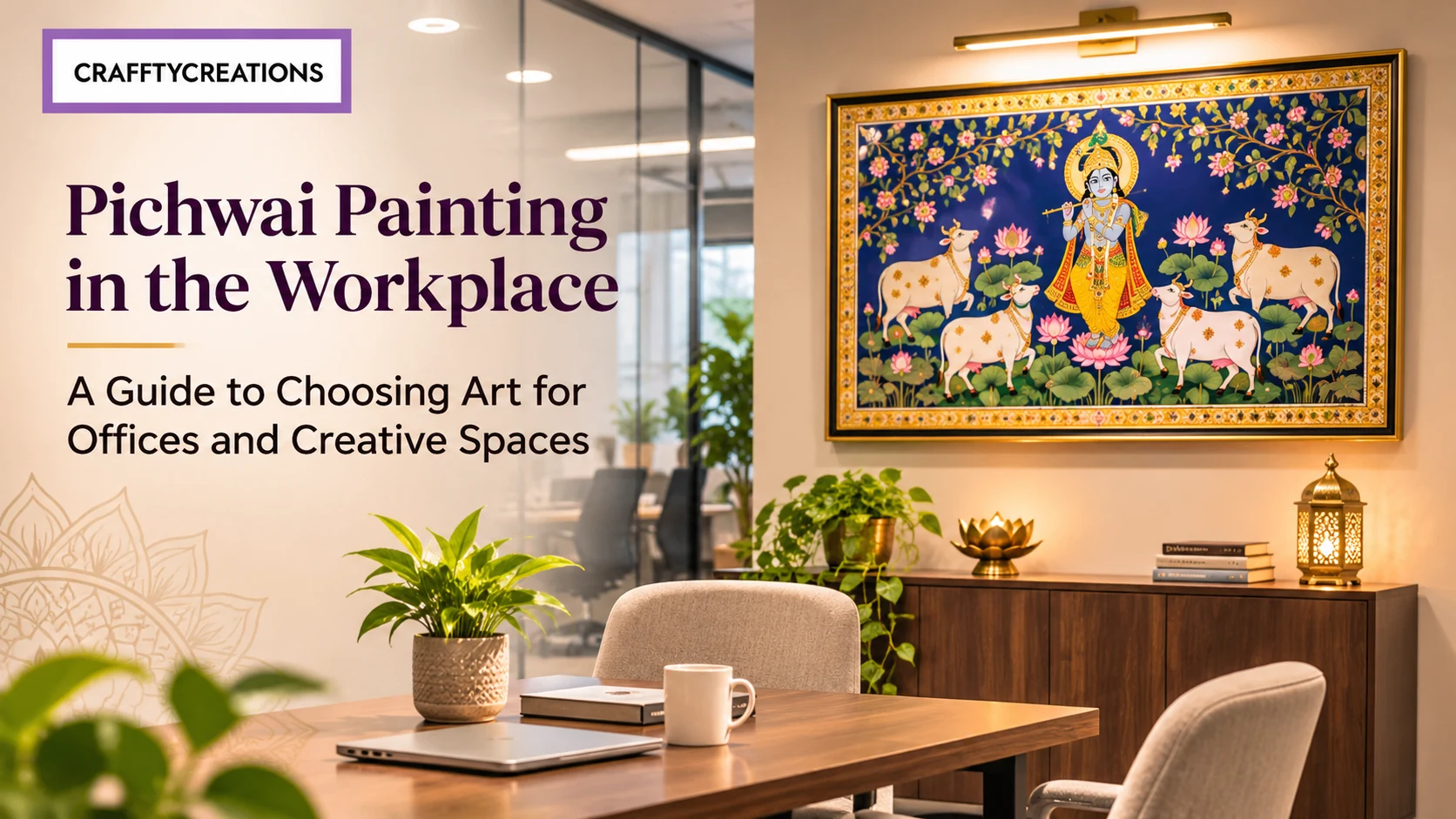
Pichwai Painting in the Workplace: A Guide to Choosing Art for Offices and Creative Spaces
Workspaces are shaped by more than desks, lighting and furniture. The artwork on a wall can introduce colour, reflect an organisation’s identity and make a room feel considered. For businesses that want to include Indian artistic traditions in a professional setting, a Pichwai painting can offer a distinctive visual element through its detailed motifs, devotional themes and decorative compositions.
Choosing artwork for an office requires a different approach from selecting a piece for a home. The size of the wall, purpose of the room, audience, lighting and overall design language all matter. A Pichwai painting should complement the workspace rather than compete with presentations, signage or everyday activity. This guide explores how to select, position and care for traditional artwork in offices, studios, reception areas and creative work environments.
1. Plan the Purpose and Placement of a Pichwai Painting
Before choosing a Pichwai painting, consider the role of the room where it will be displayed. A reception area may benefit from a visually engaging focal point, while a meeting room may need artwork that supports a calm and uncluttered atmosphere. A creative studio can accommodate a more expressive composition, provided it does not distract from the work being done.
Think about who uses the space and what visitors should notice first. A well-positioned Pichwai painting can help establish a welcoming first impression without turning the reception area into a gallery. In a client-facing area, artwork can communicate an appreciation for culture and craftsmanship. In a private office, the selection may reflect the owner’s personal interests. The purpose of the room should guide the subject, scale and placement of the artwork.
2. Choose a Pichwai Painting That Fits Your Brand Identity
Art can contribute to the visual character of a workplace, but it should feel consistent with the organisation’s identity. A business with a restrained, contemporary interior may prefer a composition with a balanced palette and clear focal point. A design studio or cultural organisation may have more room for intricate borders, layered motifs and vibrant colours.
A Pichwai painting does not need to match every brand colour exactly. In a reception or client meeting area, the selected Pichwai painting can act as a cultural accent while remaining aligned with the organisation’s visual character. Instead, look for a visual connection through one or two shades, the artwork’s overall mood or the materials used in the surrounding space. Avoid selecting an artwork only because its colours match a logo; the subject and composition should also feel appropriate.
For a workplace with a strong identity system, compare the artwork against existing elements such as wall finishes, furniture, signage and printed materials. This helps the piece feel intentionally selected rather than added at the last moment.
3. Match Pichwai Painting Size to the Wall and Viewing Distance
Scale is one of the most important practical decisions when selecting a Pichwai painting for a workplace. A small artwork may disappear on a large reception wall, while an oversized piece can dominate a compact meeting room. Measure the available wall area and consider the distance from which people will usually view the artwork.
A Pichwai painting with fine details may need enough viewing space for its composition to be appreciated. Check the dimensions of each Pichwai painting against the actual wall rather than estimating from a screen image. In a corridor, people may see it while walking past, so a clear overall arrangement can work better than details that require close inspection. In a waiting area, visitors may have more time to notice smaller elements.
| Workspace area | What to consider when choosing artwork |
| Reception or entrance | A clear focal point that is visible from the doorway |
| Meeting room | Balanced scale that does not distract from discussion |
| Private office | Artwork size suited to the desk and seating arrangement |
| Creative studio | A composition that complements the room’s visual energy |
| Corridor or passage | Placement and proportions that work for passing viewers |
Do not rely only on a product photograph to judge dimensions. Check the stated height and width, then mark those measurements on the wall with removable tape. This simple step can help you visualise the final scale before ordering.
4. Select Pichwai Painting Subjects for a Professional Context
Traditional artworks can carry devotional, cultural and symbolic meanings. Before placing a Pichwai painting in a shared or client-facing space, understand the subject represented and consider whether it suits the organisation and its audience. If the artwork includes a specific deity, festival or devotional scene, make sure the context is respected in the way it is displayed.
Some workplaces may prefer floral compositions, lotus motifs, cows or decorative patterns, while others may choose a central devotional subject. There is no universal choice for every office. The important point is to select a piece thoughtfully and avoid treating culturally significant imagery as an arbitrary decorative pattern.
If visitors come from varied backgrounds, a short, accurate description beside the artwork can provide context without making assumptions about what every viewer believes. Keep the wording factual and concise.
5. Use Colour to Complement a Pichwai Painting and Interior Design
Colour can influence how a Pichwai painting relates to a room. Rich reds, blues, greens and gold details may create a strong focal point, while softer or more limited palettes can sit comfortably in quieter interiors. The right choice depends on the wall colour, natural light, furniture finishes and the visual tone of the workplace.
A Pichwai painting can become the main accent in a neutral room, or it can complement existing colour through repeated shades. Avoid placing several highly detailed artworks close together if the room already contains busy patterns, bold furniture or prominent branding. Giving each piece enough visual space allows its details to remain legible.
When reviewing photographs online, remember that screen settings and lighting can change how colours appear. If colour accuracy is important to your interior plan, ask the seller whether additional photographs in natural light are available.
6. Check Pichwai Painting Materials, Finish and Product Information
The term Pichwai may be used for artworks made through different processes and in different formats. A hand-painted work, printed reproduction and contemporary interpretation are not identical. Read the product description and confirm the technique, support, dimensions and finish before purchasing.
| Product detail | Questions to ask before ordering | Technique | Is the artwork hand-painted, printed or made using another process? | Surface or support | Is it on cloth, canvas, paper or another material? | Dimensions | What are the exact height and width? | Framing | Is a frame included, and what type is it? | Colour and finish | Are the product photographs representative of the actual item? | Delivery | How will the artwork be packed and transported? |
A Pichwai painting intended for a public or high-traffic area may need a suitable frame or protective display arrangement. Ask for care recommendations based on the actual materials rather than assuming that every artwork can be cleaned or handled in the same way.
7. Plan Lighting and Placement Carefully
Lighting affects how an artwork is seen and how its colours appear. Avoid positioning delicate pieces where they receive prolonged direct sunlight. Strong sunlight can contribute to fading, and heat or damp conditions may be unsuitable for some materials. If the room has large windows, consider a wall with more stable light conditions.
Use lighting that allows the artwork to be viewed clearly without creating glare on glass or a reflective surface. A lighting professional can help select suitable fixtures for the room. Make sure the artwork is installed securely and does not obstruct doors, walkways, safety equipment or required workplace signage.
8. Display a Pichwai Painting with Space and Respect
A well-planned display gives a Pichwai painting enough room to be appreciated. Instead of filling every available wall, choose a location where the artwork has a clear visual role. In a reception area, it may sit above a console or on a feature wall. In a meeting room, it can be positioned where it remains visible without competing with screens or presentation surfaces.
If you plan to display multiple pieces, consider whether they share a theme, colour relationship or format. Consistent spacing and frame choices can help different works feel connected. However, a single statement artwork may be more effective than a large group in a small room.
9. Budget for a Pichwai Painting and Its Installation
The purchase price of a Pichwai painting is only one part of preparing a workplace display. Include framing, delivery, installation and any specialist advice in the overall budget. A larger or fragile piece may require professional handling. Ask for a written breakdown of charges and confirm what is included before placing an order.
A carefully chosen Pichwai painting can be added as a single feature first, with other artworks considered later. This staged approach gives the organisation time to assess how the piece works with the room before committing to a larger display. It also makes it easier to plan future purchases around the actual needs of the space.
10. Where to Explore a Pichwai Painting for Your Workspace
When exploring options through Craffty Creations, review the available artwork category, product photographs and descriptions. Check the information for each item and contact the team if you need clarification about a particular piece. Product availability, materials, dimensions and framing details should be confirmed directly before ordering.
A Pichwai painting should be selected on the basis of its subject, format, suitability for the space and the information supplied by the seller. Keep the product details and order confirmation for your records, especially when the artwork is being purchased for a business or shared premises.
Frequently Asked Questions
1. Is Pichwai artwork suitable for an office?
It can be suitable when the subject, scale and display location are appropriate for the workplace. Consider the organisation’s identity, the room’s purpose and the audience who will view it.
2. Which office area is suitable for displaying traditional artwork?
Reception areas, private offices, meeting rooms and creative studios may all provide suitable locations for a Pichwai painting. Choose a wall with enough space and lighting, and make sure the display does not interfere with workplace functions.
3. Should I choose a large or small artwork for a reception wall?
Measure the wall and consider the viewing distance before deciding on a Pichwai painting. A larger wall may need a more substantial piece, while a compact reception area may be better suited to a smaller composition.
4. What should I check before buying a Pichwai painting online?
Confirm the technique, material, dimensions, finish, framing, photographs, delivery arrangements and return policy. Ask the seller about any information that is missing or unclear.
5. How can I maintain artwork displayed in an office?
Follow the care guidance for the specific artwork. Avoid prolonged direct sunlight, damp conditions and unnecessary handling. Arrange secure installation and seek professional advice for delicate or valuable pieces.
Contact With Us
Choosing a Pichwai painting for a professional space is an opportunity to bring thoughtful design and cultural appreciation into the workplace. Explore the available collection at Craffty Creations and contact our team if you need more information about a product or wish to discuss your selection.
Phone: +91 9746570175
Email: info@crafftycreations.com
Opening Hours: Monday–Friday, 9:00 AM–5:00 PM
Weekend: Closed
Visit our website: https://crafftycreations.com/
Posts Widget
-
1

-
2

-
3

-
4



Payment Methods

Designed and Developed with ❤️ by team seofox.io