
Pichwai Painting: Smart Ways to Preserve and Display Traditional Art
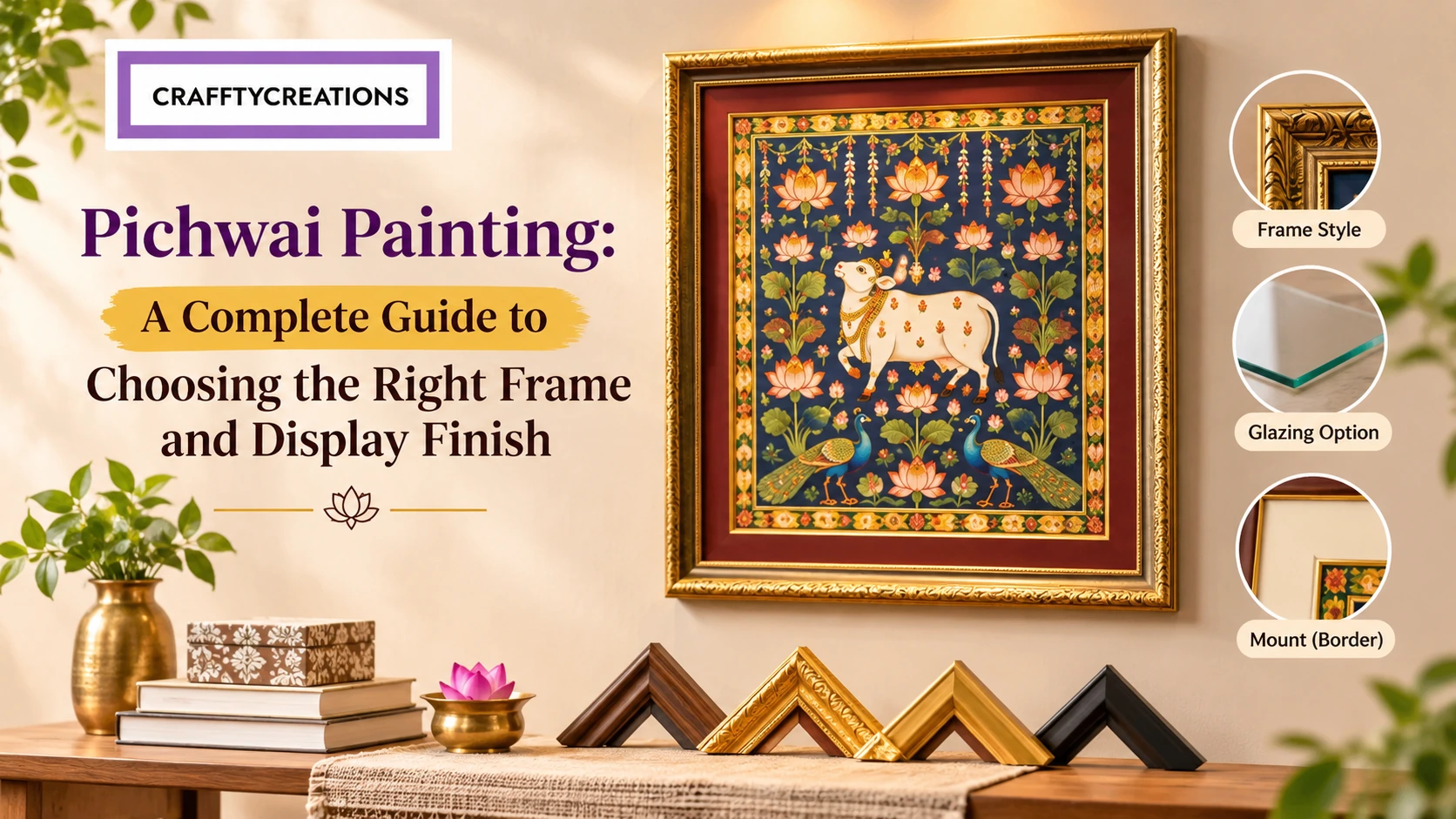
Pichwai Painting: A Complete Guide to Choosing the Right Frame and Display Finish
A traditional artwork deserves a display that respects its details. The frame, mount, protective glazing and installation method influence how a Pichwai painting looks once it is placed on a wall. When selecting a Pichwai painting, buyers often focus on the subject and colours, but finishing choices are equally important for creating a balanced presentation.
Framing is not simply about adding a decorative border. The right combination should complement the artwork without hiding its edges, overpowering its motifs or putting unnecessary pressure on its surface. This guide explains practical decisions for displaying artwork in a living space, study, reception area or personal collection.
1. Understanding Your Pichwai Painting Before Choosing a Frame
Begin by checking the Pichwai painting’s format and physical condition. A piece on cloth may need different handling from a paper-based print or canvas-mounted work. Confirm whether the edges are finished, whether the artwork is already stretched or mounted, and whether any decorative border is part of the original composition.
A Pichwai painting may contain fine details close to its edges. A frame that covers even a small part of the design can change the intended composition. Measure the visible artwork and ask the framer how much overlap the frame will create. If the surface is delicate, request a method that avoids direct pressure.
Take clear photographs of the front, back and corners before handing the piece to a framing professional. These images provide a record of its condition and help you discuss existing marks or areas that need special care.
2. Choosing the Right Frame Style for Your Pichwai Painting
The frame chosen for a Pichwai painting should create a visual boundary without becoming the main attraction. A slim frame can suit a detailed composition because it allows the artwork to remain the focal point. A wider frame may work when the surrounding wall is spacious, but its colour and profile should be considered carefully.
For a Pichwai painting with an intricate border, a simple frame can prevent the display from feeling crowded. If the artwork has a restrained composition, a more decorative frame may add visual definition. The goal is to create a relationship between the artwork, frame and room.
Compare physical frame samples beside the artwork under the lighting where it will be displayed. Small differences in finish can look more noticeable in person than they do in online photographs. Avoid choosing a frame based only on a product image or a colour shown on a phone screen.
3. Best Frame Materials and Finishes for a Pichwai Painting
Frames for a Pichwai painting are available in different materials, profiles and surface finishes. Wood can provide a warm, traditional appearance, while metal profiles often create a cleaner and more contemporary outline. The choice should reflect the artwork’s visual character as well as the practical requirements of the room.
| Frame option | Visual effect | Points to consider |
| Natural wood | Warm and classic | Check the finish and overall weight |
| Dark wood | Creates a defined border | Ensure it does not overpower darker artwork |
| Metallic finish | Adds a refined accent | Avoid excessive shine |
| Slim metal | Minimal and contemporary | Confirm secure support |
| Ornate frame | Decorative and traditional | Use when it complements the composition |
A Pichwai painting with multiple colours and detailed motifs may already have a strong visual presence. A quieter frame finish can help maintain balance. The frame should also be sturdy enough for the artwork’s size and weight. Ask about joining quality, hanging hardware and suitability for the intended wall.
4. Choosing the Right Mount and Border for Your Pichwai Painting
A mount is the visible border placed between a Pichwai painting and its frame. It can create breathing space around the composition and separate the artwork from the frame. However, a mount is not suitable for every format, particularly when the original design already includes an intentional decorative border.
When considering a mount for a Pichwai painting, check that the opening does not cover important details. The mount colour should support the artwork rather than introduce a competing shade. Neutral tones can be useful, but the final choice should be made beside the actual piece.
Ask whether the mount material is appropriate for long-term display. For delicate or valuable works, consult a professional framer about conservation-oriented materials and methods. Avoid adhesive tapes or improvised fixes directly on the artwork, as they may leave marks or cause damage when removed.
5. Glazing Options to Protect Your Pichwai Painting
Glazing refers to the transparent sheet placed in front of a Pichwai painting or other artwork. It may be glass or a suitable clear acrylic product. Its purpose is to provide a barrier against dust and accidental contact, but the choice depends on the artwork, frame construction, location and budget.
| Glazing type | Potential benefit | Important consideration |
| Standard glass | Clear viewing surface | Can reflect light and adds weight |
| Anti-reflective glass | Can reduce visible reflections | Confirm product specifications |
| Acrylic glazing | Lightweight and less likely to shatter | Can scratch and may attract static |
| UV-filtering glazing | Can reduce some ultraviolet exposure | Does not make artwork sunlight-proof |
A Pichwai painting should not be placed in direct sunlight simply because protective glazing has been selected. Light exposure can still affect sensitive colours and materials over time. Ask the framer to explain the glazing product’s actual specifications rather than relying on broad labels such as protective or premium.
There should also be suitable spacing between the artwork and glazing when the material requires it. Direct contact may be inappropriate for some surfaces. A qualified framer can recommend a safe construction based on the artwork’s format and condition.
6. Selecting the Ideal Frame Size for Your Pichwai Painting
The frame for a Pichwai painting should be proportionate to both the artwork and the wall. A narrow profile may disappear around a large piece, while an oversized border can make a small composition feel compressed. Measure the artwork accurately, including any existing border that needs to remain visible.
When planning a Pichwai painting display, consider the distance from which people will view it. A piece in a narrow passage may need a simpler outline, while artwork in a larger room can accommodate a more substantial frame. The frame’s total outside dimensions also matter because they determine the wall space required.
Ask the framer to provide the final external measurements before production begins. This helps avoid surprises during installation and makes it easier to position wall hooks correctly.
7. Plan the Display Location and Hanging Method
Choose a wall where the Pichwai painting can be seen comfortably and is less exposed to avoidable risks. Keep it away from damp areas, sources of heat and locations where it may be repeatedly touched or knocked. Avoid placing it where doors, furniture or daily movement could cause accidental impact.
A framed Pichwai painting should be supported by hanging hardware suited to its total weight and wall type. Larger pieces may need more than one secure fixing point. If you are unsure about the wall structure or installation method, use a qualified installer rather than relying on a single ordinary nail.
Before drilling, mark the intended position and check the artwork’s height from the main viewing area. Also consider nearby switches, shelves, furniture and other wall objects. Planning can prevent repeated repositioning after the frame has been installed.
8. Protect Colours from Light, Dust and Humidity
A stable display environment is important for a Pichwai painting and many other types of artwork. Prolonged direct sunlight can contribute to fading, while damp conditions may create problems for some materials. Sudden changes in temperature and humidity can also be unsuitable for delicate pieces.
For a Pichwai painting, use a soft, dry approach to routine care around the frame. Dust the frame gently with a clean cloth, taking care not to press against the artwork or allow moisture to enter the frame. Do not spray household cleaners directly onto glazing, as liquid can seep through edges and affect the artwork or mount.
If the framed piece develops condensation, mould-like marks, loose material or visible changes, avoid opening or repairing it yourself. Seek advice from a professional framer or conservator who can assess the materials and recommend an appropriate response.
9. Questions to Ask Before Framing
A clear conversation about framing a Pichwai painting can prevent avoidable mistakes. Explain whether the artwork is original, printed, mounted or stretched, and share any care instructions supplied by the seller. Ask how the artwork will be held in place and whether any adhesive will touch its surface.
Before approving a Pichwai painting frame, request confirmation of the frame material, mount dimensions, glazing type, finished outside size and hanging hardware. Ask to see a sample or mock-up if the frame has a distinctive colour or profile. This is especially useful when the artwork includes fine details near its edges.
Also confirm the estimated completion time, packaging method and whether installation is included. Keep the order details and care recommendations for future reference.
10. Create a Display That Keeps the Artwork as the Focus
The finished display of a Pichwai painting should feel intentional rather than over-decorated. Allow enough space around the frame so the artwork can be viewed without competing with nearby objects. If it is part of a group, keep spacing and alignment consistent while making sure each piece has enough room.
A carefully framed Pichwai painting can become a meaningful focal point when the frame, mount and placement work together. The best result is not necessarily the most expensive frame. It is the one that supports the artwork’s format, protects it appropriately and suits the space where it will be displayed.
Craffty Creations features Pichwai painting artwork within its painting selection. Before choosing a piece, review the product information and contact the team if you need clarification about the available artwork or its presentation. Confirm product-specific details directly before making a purchase.
Frequently Asked Questions
1. Which frame is best for a Pichwai painting?
There is no single frame that suits every Pichwai painting. Consider the artwork’s size, material, colours and decorative border. A simple frame often works well when the composition is already detailed, while a more decorative profile may suit some pieces.
2. Should I use glass for a Pichwai painting?
Glazing may help protect a Pichwai painting from dust and accidental contact, but the right option depends on its surface and format. Ask a professional framer whether glass or acrylic is suitable and whether spacing is needed between the glazing and artwork.
3. Can I frame a Pichwai painting without a mount?
Yes, depending on the artwork’s format and edge treatment. If the original composition includes a decorative border, a mount may cover important details. Review the proposed opening with the framer before approving the design.
4. How do I protect framed artwork from fading?
Avoid prolonged direct sunlight and choose a stable display location. UV-filtering glazing may reduce some ultraviolet exposure, but it does not eliminate all light-related risks. Follow care advice suited to the artwork’s materials.
5. Can I clean the artwork while it is inside the frame?
Do not wipe or apply cleaning products directly to a Pichwai painting. Dust the frame gently and follow the framer’s care instructions for the glazing. If you notice moisture, mould or surface changes, consult a qualified professional.
Contact With Us
Looking for a traditional artwork to display with care and attention to detail? Explore the painting selection at Craffty Creations and contact our team if you need more information about a product. We can help you review the available details so you can make an informed selection.
Phone: +91 9746570175
Email: info@crafftycreations.com
Opening Hours: Monday–Friday, 9:00 AM–5:00 PM
Weekend: Closed
Visit our website: https://crafftycreations.com/
Posts Widget
-
1
-
2

-
3

-
4



Payment Methods

Designed and Developed with ❤️ by team seofox.io