
Pichwai Painting: A Complete Guide to Recognising Traditional Indian Art
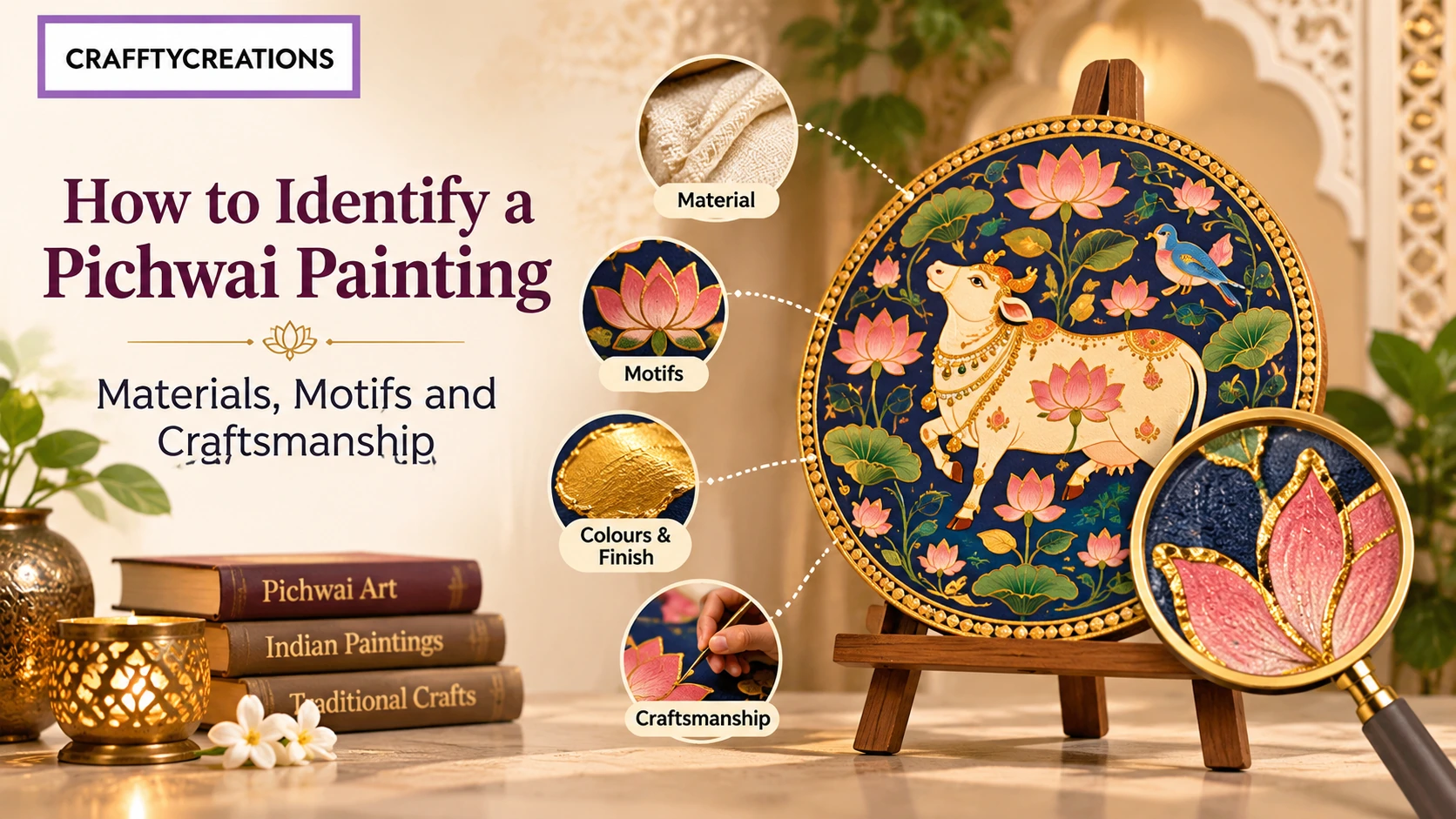
How to Identify a Pichwai Painting: Materials, Motifs and Craftsmanship
A beautiful artwork can change the feeling of a room, but choosing one becomes easier when you understand its background and making process. A Pichwai painting is recognised for devotional imagery, intricate motifs and a visual tradition associated with Nathdwara in Rajasthan. Its subjects often include Shrinathji, cows, lotus flowers, peacocks and scenes connected with Krishna devotion. Today, these designs appear in traditional cloth artworks as well as contemporary decorative formats.
Not every product described as Pichwai art is made in the same way. Some pieces are hand-painted, while others are printed, embellished or adapted onto wood, canvas or other surfaces. Understanding these differences helps you choose artwork with realistic expectations. This guide explains the visual details, materials and product information worth checking before you buy.
1. Pichwai Painting: Traditional Roots and Nathdwara Art
The traditional Pichwai painting style is closely associated with Nathdwara and the worship of Shrinathji, a form of Lord Krishna. Historically, large painted cloth hangings were placed behind the deity in temples. Their designs could change with festivals, seasons and occasions in the temple calendar. This devotional setting explains the detailed compositions and symbolic imagery found in the art.
In a Pichwai painting, common motifs include decorated cows, lotus ponds, peacocks, gopis and Krishna-related scenes. These elements are arranged to support the central theme rather than simply fill empty space. When looking at a Pichwai painting, notice how the main subject relates to the surrounding flowers, figures and decorative borders. The overall composition can tell you as much about a Pichwai painting as its colour palette.
2. Pichwai Painting: Check the Material and Surface
The surface is one of the first details to examine when evaluating a Pichwai painting. Traditional examples were commonly created on prepared cloth, often cotton. Contemporary interpretations may use canvas, paper, wood or other decorative bases. A wooden plate with Pichwai-inspired motifs, for example, is a modern décor format influenced by the tradition; it should not automatically be described as a traditional temple cloth hanging.
Before ordering, read the product description and confirm the base material. If the listing identifies wood, canvas or a printed surface, use that information when comparing products. Ask the seller if the material is unclear. A well-described Pichwai painting product should make it reasonably easy to understand what surface you are purchasing and how it is likely to be displayed.
| Detail to check | What to look for | Why it matters |
| Base material | Cotton cloth, paper, canvas, wood or another stated surface | Helps identify the format and care needs |
| Making method | Hand-painted, printed, embellished or mixed technique | Clarifies the type of craftsmanship |
| Finish | Matte, glossy, textured or metallic details | Affects the appearance under different lighting |
| Dimensions | Height, width and overall shape | Helps plan the display location |
| Product photographs | Close-ups and multiple viewing angles | Makes details easier to assess |
3. Examine Motifs, Linework and Composition
Fine details can reveal the visual approach of a Pichwai painting. Look at whether the main subject is clearly defined and whether smaller elements such as leaves, petals, ornaments and feathers are arranged carefully. Consistent outlines and thoughtful spacing can make a composition feel balanced. In a Pichwai painting, repeated patterns and decorative borders should support the central subject rather than compete with it.
Traditional imagery may include lotus flowers, decorated cows, peacocks and scenes associated with Krishna. Some compositions are symmetrical, while others create movement through groups of figures or floral arrangements. There is no single layout that every artwork must follow. Instead, consider whether the motifs feel connected and whether the overall design has a clear focal point.
4. Pichwai Painting: Understand the Colours and Decorative Finish
Colour is an important part of a traditional Pichwai painting. Traditional works are known for vivid combinations, and historical examples used pigments from natural and mineral sources. Some artworks also include gold or silver detailing. However, techniques and materials vary across workshops and contemporary products. A bright colour or metallic effect by itself does not prove that an artwork is antique or traditionally handmade.
When assessing a Pichwai painting, check whether the product description explains its finish. Close-up photographs can help you see whether details appear painted, printed, embroidered or applied separately. If metallic accents are mentioned, check whether they are paint, foil, thread or another material. This makes it easier to understand the product’s appearance and care requirements.
5. Verify Craftsmanship Claims Before Buying
A Pichwai painting product description may use words such as handmade, hand-painted, traditional or artisan-crafted. These terms should be supported by clear information about the process. A contemporary interpretation can still be attractive and meaningful, but it should not be presented as an antique or a fully traditional work unless that description is accurate and supported.
Before purchasing a Pichwai painting, consider asking whether the design is painted by hand or reproduced through printing, what the base material is, and whether embellishments are painted or added separately. You can also ask whether product photographs show the exact item or representative examples. Clear answers help you compare options and avoid misunderstandings.
| Buying question | Information to confirm |
| Is it hand-painted? | Confirm whether the design is painted by hand or printed |
| What is the base? | Check whether it is wood, cloth, canvas, paper or another material |
| What is the finish? | Ask about paint, foil, embroidery, coating or other embellishment |
| What size will arrive? | Verify the listed dimensions before ordering |
| How should it be cared for? | Check guidance for dust, moisture, sunlight and cleaning |
6. Pichwai Painting: Select a Design That Suits Your Space
The size, shape and colour of a Pichwai painting should work with the place where you plan to display it. A compact piece may suit a shelf or console, while a larger composition may need more open wall space. Consider the colours already present in the room and decide whether you want the artwork to blend with the décor or become a focal point.
If you are choosing a Pichwai painting for a living room, entryway or prayer area, measure the available space before ordering. Check the product dimensions and consider its shape. A round wooden décor piece creates a different effect from a rectangular cloth hanging. Leave enough surrounding space so that the motifs remain visible and the display does not feel crowded.
7. Pichwai Painting: Follow Care Instructions for the Specific Material
Care for a Pichwai painting depends on the surface and finish. A cloth artwork may need different handling from a wooden decorative plate or printed canvas. Avoid assuming that every piece can be cleaned with water or household sprays. Excessive moisture, direct sunlight and rough cleaning may affect colours or finishes over time. Follow the care instructions supplied for the particular product.
For a wooden Pichwai painting, use a soft, dry cloth to remove loose dust unless the seller recommends another method. Do not scrub painted or embellished areas. For cloth-based pieces, ask whether the artwork should be framed, kept away from damp areas or handled by its edges. Appropriate care helps preserve the appearance of the item.
Explore Pichwai-Inspired Décor at Craffty Creations
Craffty Creations offers products across home décor, handicrafts, fashion, jewellery and gifting. Its collection includes Pichwai-inspired decorative pieces in wooden formats featuring motifs such as cows and elephants. These contemporary décor options bring traditional Indian visual elements into modern spaces. Check each product listing for its stated material, dimensions, finish and availability so you know exactly what you are choosing.
Whether you prefer a detailed motif or a compact decorative format, compare the photographs and read the product description carefully. A Pichwai painting purchase should begin with clear information about the item, not assumptions about its origin or technique. Explore the available designs and select a piece that suits your taste, display space and expectations.
Frequently Asked Questions
1. What makes Pichwai art different from other Indian paintings?
Pichwai art is associated with Nathdwara and the devotional tradition of Shrinathji. Its compositions commonly feature Krishna-related themes, cows, lotuses, peacocks and festival or seasonal scenes. The arrangement of these motifs gives the style its recognisable visual character.
2. Are all Pichwai artworks hand-painted?
No. Traditional Pichwai painting works were painted by hand, but contemporary products may be printed, embellished or adapted onto wood, canvas, paper and other surfaces. Check the individual product description to understand the method used.
3. Which materials are used for traditional Pichwai art?
A traditional Pichwai painting was commonly made on prepared cloth, often cotton, using pigments and detailed brushwork. Some works also include gold or silver decoration. Contemporary versions can use different bases and finishes.
4. How can I check the quality before ordering online?
To assess a Pichwai painting online, read the material and technique details, check the dimensions, review close-up photographs and confirm the finish. If important information is missing, contact the seller before placing an order.
5. How should I maintain a Pichwai-inspired wooden artwork?
For a wooden Pichwai painting, keep it away from excessive moisture and prolonged direct sunlight. Dust gently with a soft, dry cloth and avoid abrasive cleaners. Follow the care guidance provided for the specific product.
Contact Craffty Creations
Explore a Pichwai painting that brings the visual charm of Indian art into your space. Browse the available decorative pieces, review each product’s details and contact Craffty Creations if you need help choosing a design.
Phone: +91 9746570175
Email: info@crafftycreations.com
Opening Hours: Monday–Friday, 9:00 AM–5:00 PM
Weekend: Closed
Website: https://crafftycreations.com/
Contact page: https://crafftycreations.com/contact/
Posts Widget
-
1

-
2
-
3
-
4


Payment Methods

Designed and Developed with ❤️ by team seofox.io